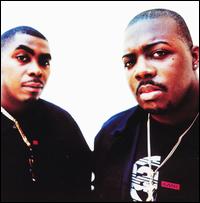
On the surface, the sample-reliant productions and monotone rapping styles of Erick Sermon and Parrish Smith had little to recommend them, but the duo's recordings as EPMD were among the best in hip-hop's underground during the late '80s and early '90s. Over the course of four albums (from the 1988 classic Strictly Business to 1992's Business Never Pesonal), they rarely varied from two themes: dissing sucker MCs and recounting sexual exploits. But a closer look reveals that the duo's rhymes were nothing less than incredible, simply undervalued because of their lack of intonation during delivery. EPMD also had a feel for a good groove, and created numerous hip-hop classics, including "It's My Thing," "You Gots to Chill," "Get the Bozack," "Strictly Business," and "Rampage."Though EPMD's hardcore style influenced the urban-oriented gangsta '90s, Erick Sermon (aka E Double E; b. Nov. 25, 1968) and Parrish Smith (aka Pee MD; b. May 13, 1968) were both raised in the Long Island suburb of Brentwood. They moved into rap separately, with Smith DJing for Rock Squad on a single for Tommy Boy. After coming together in 1987 — naming themselves EPMD, short for "Erick and Parrish Making Dollars" — the duo recorded their debut "It's My Thing" in three hours. The single was later licensed to Chrysalis, and EPMD signed to Sleeping Bag/Fresh
Records for debut album Strictly Business. Propelled by several strong singles ("You Gots to Chill," the title track), the album eventually went gold, as did 1989's follow-up, Unfinished Business. Signed to Def Jam by the beginning of the '90s, EPMD returned in 1990 with Business An Usual and Business Never Personal two years later. By 1992, they presided over an extended family dubbed the Hit Squad, including Redman, K-Solo, and Das EFX. The duo split later that year, however, prompting solo careers for each; Sermon debuted in 1993 with No Pressure, and Smith made his statement on 1994's Shede Business. The duo re-formed EPMD in 1997, recording a strong comeback LP, Back In Business. Out Of Business followed in 1999.Formed in 1987.
EPMD - Strictly Business (1988; Priority)
EPMD's blueprint for East Coast rap wasn't startlingly different from many others in rap's golden age, but the results were simply amazing, a killer blend of good groove and laid-back flow, plus a populist sense of sampling that had heads nodding from the first listen (and revealed tastes that, like Prince Paul's, tended toward AOR as much as classic soul and funk). A pair from Long Island, EPMD weren't real-life hardcore rappers — it's hard to believe the same voice who talks of spraying a crowd on one track could be name-checking the Hardy Boys later on — but their no-nonsense, monotoned delivery brooked no arguments. With their album debut, Strictly Business, Erick Sermon and Parrish Smith really turned rapping on its head; instead of simple lyrics delivered with a hyped, theatrical tone, they dropped the dopest rhymes as though they spoke them all the time. Their debut single, "You Gots to Chill," was a perfect example of the EPMD revolution; two obvious samples, Zapp's "More Bounce to the Ounce" and Kool & The Gang's "Jungle Boogie," doing battle over a high-rolling beat, with the fluid, collaborative raps of Sermon and Smith tying everything together with a mastery that made it all seem deceptively simple. There was really only one theme at work here — the brilliancy of EPMD, or the worthlessness of sucker MCs — but every note of Strictly Business proved their claims.
Click To DownloadEPMD - Unfinished Business (1989; Priority)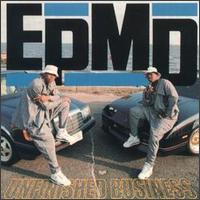
EPMD avoided the dreaded sophomore curse and kept its artistic momentum going on its second album, Unfinished Business. Once again, the duo triumphed by going against the flow — when MCs ranging from Public Enemy to Sir Mix-A-Lot to N.W.A. weren't hesitating to be abrasive and hyper, EPMD still had a sound that was decidedly relaxed by rap standards. For the most part, EPMD's lyrics aren't exactly profound — boasting and attacking sucker MCs is still their favorite activity. However, Erick and Parrish do challenge themselves a bit lyrically on "You Had Too Much to Drink" (a warning against drunk driving) and "Please Listen to My Demo," which recalls the days when they were struggling. But regardless of subject matter, they keep things exciting by having such an appealing, captivating sound.
Click To Download
EPMD - Business as Usual (1990; Def Jam)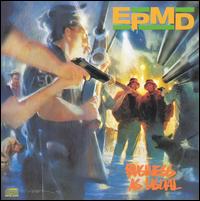
Business as Usual is an ironic title for EPMD's third album — for in terms of production, it was anything but business as usual for the Strong Island rappers. While Strictly Business and Unfinished Business favored a very simple and basic approach to production consisting primarily of samples (many of them clever) and drum machines, the production is busier and more involved this time — and even suggests Marley Marl. Unfortunately, the sampling isn't as clever as before. What didn't change was EPMD's relatively laid-back approach to rapping and a preoccupation with sucker MCs. Though not as inspired as its two predecessors, the album does have its moments — including "Rampage" (which unites EPMD with LL Cool J), "Give the People," and "Gold Digger," a candid denunciation of "material girls" who exploit and victimize men financially after a divorce.
Click To Download EPMD - Business Never Personal (Jul 28, 1992; Def Jam)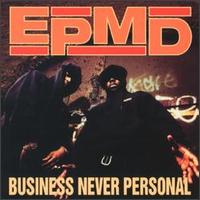
Having recorded two undeniable hip-hop classics right out the box, EPMD met with a modicum of disapproval for the first time ever upon the release of its third album, which was graded down by some fans and critics because it seemed to be, yes, more business as usual rather than any sort of musical maturation or progression. Unbowed, Erick Sermon and Parrish Smith returned with what, at the time, was rumored even before it hit shelves to be their final album together. Indeed, the duo broke up not long after Business Never Personal came out. It was a perfect way to go out together. The album proved to be both a commercial and artistic triumph at the time, and with each passing year, it sounds more and more like their finest — if not their most historically important — recording. Unapologetically underground throughout its career up to this point, the duo was savvy enough to throw a bone to an ever-growing rap-listening public in a supposed bid for "Crossover" appeal even as it was taking its concluding bow, thereby negating any cries of "sellout" that otherwise might have been tossed at the group's reputation for independence from any commercial concerns. Frankly, though, it would have been a difficult claim to make stick against EPMD anyway. Despite its appealing Zapp sample and hook, "Crossover" is every bit as coated in street soot as the rest of its music. Nevertheless, it is undoubtedly the catchiest thing the pair had ever created. The rest of the album is harder hitting but in every respect as captivating, running from the abrasively metallic "Boon Dox" to the crowd-moving Hit Squad posse cut "Head Banger," and returning the group more often than not to the scowling (though often tongue-in-cheek) intensity and minimalistic aesthetic of its first two records. And if Erick and Parrish hadn't yet made the impending end of their partnership explicit enough, they do so on the final track, where they finally, figuratively kill off Jane, the transvestite prostitute who had hawked them through each of their albums.
Click To DownloadEPMD - Back in Business (Sep 16, 1997; Def Jam)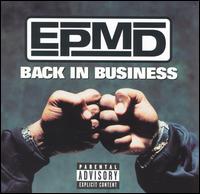
EPMD's reunion album Back in Business may not be entirely successful, but it's far from being an embarrassment. Erick Sermon and Parrish Smith remain strong, if unexceptional rappers, but the true news is in the music.
Much of Back in Business captures the wild spirit of EPMD's classic late-'80s albums, complete with dense layers of sounds, samples and funky beats. There's enough skill and invention in the production — and just enough energy in the rapping — to make Back in Business a welcome comeback.
Click To DownloadEPMD - Out of Business (Jun 29, 1999; Def Jam)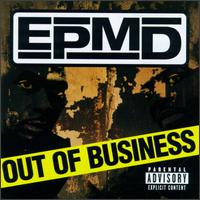
After the popular, praised 1997 comeback album Back In Business, Erick Sermon and Parrish Smith returned with another solid effort that proved they remained one of the best combos in hip-hop, as relevant and tight in 1999 as they were ten years earlier. Most of the tracks are in-house productions (either Sermon or Smith), a true rarity in the '90s hip-hop world, and they lend the album a continuity sorely lacking considering the legion of rap albums that feature a different producer for each track. And as the duo has done for ages, EPMD does more than just trade in familiar riffs to drive the tracks on Out of Business. The only familiar sample is on the "Intro," and even there, Sermon and Smith turn "Fanfare for Rocky" into something over and above the original. The pair's raps have definitely progressed in the past ten years, as "Pioneers," "U Got Shot," "Right Now," and "Hold Me Down" more than prove. One of the album highlights is the anti-crossover diatribe "Rap Is Still Outta Control," featuring Busta Rhymes (another rapper who's been around long enough to know) and including great lines like, "They took our music and our beat and tried to make it street/And then got in the magazine to try to sound all sweet." Still, EPMD occasionally falls prey to current trends, with obligatory string-sample productions on "Symphony" and "Symphony 2000" (the latter with Redman,
Method Man, and Lady Luck) that serve only to obscure the great guest raps. Despite the title, in the liner notes EPMD dispels any rumors that this could be the duo's last album.
Leave your comment to support.Enjoy! ;)
And remember you must support artists go and buy this albums.
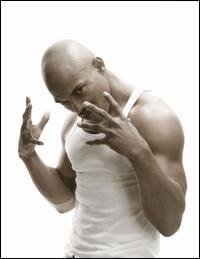 Rapper Sticky Fingaz was the frontman of hardcore rap goup ONYX and is best known for his husky voice and brash rapping style that dragged the hip-hop sound into the mosh pit. The Brooklyn-born Kirk Jones spent much of his early life as a member of a notorious New York street gang. Jones began performing with his cousin Fredro Starr, and the pair was soon discovered by hip-hop legend Jam Master Jay. Soon after, they formed ONYX. In 1993, ONYX released their first album, Bacdafucup, which became a crossover hit thanks in large part to Sticky Fingaz' gritty style and raspy voice. The group produced two more records before Fingaz left the group to pursue solo projects. Jones also pursued a side career as a film actor. His first solo album, Black Trash: The Autobiography of Kirk Jones, which was released in 2000, is a conceptual album that is cinematic in scope that tells the story of Kirk Jones, a down-on-his-luck ex-con who finds himself wrapped up in the street life. The record stands as an impressive debut that blends Sticky Fingaz' two loves: film and hip-hop. Decade, released on D3 Entertainment, followed in 2003. It didn't fare nearly as well as the debut, but it did crack the Billboard 200.
 Sticky Fingaz' oft-delayed solo debut, Black Trash: The Autobiography of Kirk Jones, is a bold conceptual endeavor that loosely follows the same format Prince Paul implemented on his hip-hopera Prince Among Thieves. Scripted to fit the silver screen, Black Trash chronicles the trials and tribulations of Kirk Jones, a down-on-his-luck knucklehead who always manages to find trouble. Playing out like a lyrical collage, Black Trash is an emotional roller coaster that tackles the quintessential tale of good vs. evil. Though highly imaginative, like most Hollywood blockbusters, Black Trash fights bouts of long-windedness (this is particularly evident toward the LP's conclusion), yet there is still plenty to chew on in between. Displaying a lyrical diversity that his stint with ONYX rarely suggested, Sticky serves up a slew of profound moral messages on the thought-provoking "Why" and "Oh My God," where in a maniacal state Sticky questions God's existence. Yet, his lyrical transformation is best exemplified on "Money Talks" (featuring Raekwon), where Sticky speaks in third-person, as a dollar bill, and vividly depicts how the material possessions people strive to own eventually end up owning them. While the dramatic ebb and flow of Black Trash is the LP's saving grace, as the running dialogue (contributed by Omar Epps) and frequent skits ingeniously captures the many complex intricacies that make up Sticky/Jones' conflicting personas. However, it is hard to feel sympathetic for the character, as he is a man who, through the course of this LP, shows little regard for human life, kills his best friend, beats his wife, and deserts his child. Yet, similar to James Gandolfini's portrayal of Tony Soprano, Sticky convincingly brings Jones to life, and he is such an enigmatic character that you can't help but root for him, even though he doesn't deserve it.
 Not nearly as ambitious as Black Trash: The Autobiography of Kirk Jones , Sticky Fingaz' second album also isn't quite as compelling. Off Universal and now on D3 Entertainment — a graveyard of sorts for former major-label artists — the MC produces the bulk of the tracks along with DSP, though wiz Scott Storch takes over for a pair of tracks, both of which are unsurprising standouts. Despite a shortage of strong material and some uninspired production work, Sticky Fingaz remains a remarkable MC, and some might be pleased that he's relying less on gruff, in-your-face shouting and more on a menacing delivery that's kept to a relatively low-key and stern dynamic. Hopefully this will lead to better things.

 1 I Ain't Trickin' 4:18
 On the surface, the sample-reliant productions and monotone rapping styles of Erick Sermon and Parrish Smith had little to recommend them, but the duo's recordings as EPMD were among the best in hip-hop's underground during the late '80s and early '90s. Over the course of four albums (from the 1988 classic Strictly Business to 1992's Business Never Pesonal), they rarely varied from two themes: dissing sucker MCs and recounting sexual exploits. But a closer look reveals that the duo's rhymes were nothing less than incredible, simply undervalued because of their lack of intonation during delivery. EPMD also had a feel for a good groove, and created numerous hip-hop classics, including "It's My Thing," "You Gots to Chill," "Get the Bozack," "Strictly Business," and "Rampage."Though EPMD's hardcore style influenced the urban-oriented gangsta '90s, Erick Sermon (aka E Double E; b. Nov. 25, 1968) and Parrish Smith (aka Pee MD; b. May 13, 1968) were both raised in the Long Island suburb of Brentwood. They moved into rap separately, with Smith DJing for Rock Squad on a single for Tommy Boy. After coming together in 1987 — naming themselves EPMD, short for "Erick and Parrish Making Dollars" — the duo recorded their debut "It's My Thing" in three hours. The single was later licensed to Chrysalis, and EPMD signed to Sleeping Bag/Fresh


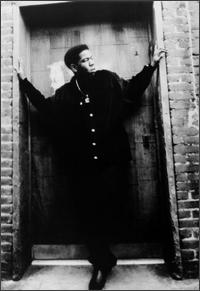 An above-average rapper blessed with a bit of luck and connections as well as talent, Craig Mack practically made Puff Daddy's Bad Boy label with a remix of his 1994 hit "Flava in Ya Ear." Based in Brentwood, Long Island, Mack cut his first single while still a teenager, though nothing came of it. He was working as a go-fer for hometown heroes EPMD when he hooked up with Sean "Puff" Combs, who offered him a spot on a Mar J. Blige remix in 1992. Impressed, Combs offered him a contract on his Bad Boy label, distributed through Arista. What really sold the LP, however, was a platinum remix of the top single "Flava in Ya Ear." Featuring a parade of East Coast talent — The Notorious B.I.G., Rampage, LL Cool J, and Busta Rhymes — it ranked as one of the first posse tracks to go overground in a big way; a Top Ten pop hit, and number one on the rap and dance charts. Mack returned in 1997 (after having severed relations with Cmobs) with Operation: Get Down, an executive production of longtime East Coast head Eric B. The album didn't even make the Top 40, and Mack struggled for a contract during the rest of the decade. After recording a few white labels, he returned to Bad Boy with an appearance on Comb's We Invented The Remix LP ("Special Delivery" featuring Ghostface Killah and Keith Murray) and announced plans for a new Bad Boy LP.
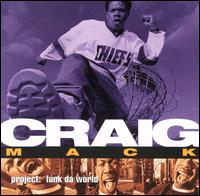 The first hit album released on Sean "Puff" Combs' Bad Boy label, Craig Mack's Project: Funk da World lacks the hardcore edge of Bad Boy's next breakout artist, The Notorious B.I.G., instead gunning for the dancefloor with a slight hint of street attitude. The beats are laid-back, mid-tempo, and effortlessly funky, influenced by the vibe of Dr. Dre's G-funk sound but not slavishly derivative at all. Mack isn't the most skillful rapper who ever lived, but he's game on most of these tracks, with a low, raspy voice and a loose, casual style that's hard to resist when he's on. When he isn't, he strays a little too far off the beat, or lacks enough variety in his flow and surprises in his rhymes to hold the listener's interest. But he's good enough to work a groove, and sometimes that's all you need for a great dance record. The formula gets repetitive over the course of an entire album, especially on the tracks with too many choruses, but there are some definite high points, most notably the smash "Flava in Ya Ear," "Get Down," and "Funk Wit da Style." There's also a clever sample of the Days of Our Lives theme song on "Real Raw." In the end, Project: Funk da World isn't a bad party record at all, though it's less engaging as a self-contained listen.


