 Queens-based Kool G Rap & DJ Polo left one of the most impressive rap discographies in their wake. Though Kool G Rap's growth as an MC from their first single in 1986 to their final album in 1992 was considerable, the duo started off running and never looked back. The pair never had the large profile enjoyed by others in Marley Marl's extended family (including Big Daddy Kane, Biz Markie, and Roxanne Shanté), but aftershocks continue to be felt throughout the East Coast, from the Notorious B.I.G. to Nas to Wu-Tang Clan to the underground scene. When their first single, 1986's "I'm Fly"/"It's a Demo," was released on Cold Chillin', G Rap was already a formidable MC who could boast with the best of them. However, it would be narratives that he would become most known for, in addition to some of the raunchiest rhymes hip-hop has ever known. Throughout the years, Marley Marl, Large Professor, and Sir Jinx provided valuable production assistance. The duo released the formative "I'm Fly"/"It's a Demo" in 1986, but G Rap (born Nathaniel Wilson) truly broke out on the Juice Crew's "The Symphony," a group cut of great legend produced by Marley Marl that also included turns from Masta Ace, Craig G., and Big Daddy Kane. After a good deal of anticipation was built for the first Kool G Rap & DJ Polo album, Road to the Riches saw the light of day in 1989. Produced by Marl and released on his Cold Chillin' label, the album included a handful of timeless moments while alluding to greater potential.That potential was fulfilled with the following year's Wanted: Dead or Alive. Marley Marl remained partly responsible for the duo's sound, while Main Source's Large Professor and Eric B. also pitched in with production work. On this album, G Rap became an MC of top caliber; he expanded his range as a magnificent storyteller on tracks like "Streets of New York" (a number three rap single) and "Wanted: Dead or Alive." Released in 1992, Live and Let Die landed the duo in a bit of hot water; its cover, depicting the duo feeding meat to rabid dogs in front of two restrained white men, gained a fair amount of attention in the press. The controversy played a role in shooting the album up to the Top 20 of the R&B/hip-hop albums chart, but the attention unfortunately waned. Just as accomplished as Wanted: Dead or Alive (if not more so), the album featured the sympathetic handiwork of Sir Jinx and Trakmasterz and helped bring G Rap's increasingly profane and vivid tales to extreme levels. G Rap and Polo went their separate ways shortly after that. G Rap put out three albums between the mid-'90s and early '00s, while Polo cut a single with Ice-T and porn star Ron Jeremy. Landspeed kept the duo's legacy alive through a low-key reissue campaign; in 2000 and 2001, separate releases combined the first two albums and anthologized their entire
career together.
Kool G Rap & DJ Polo - Road to the Riches (Mar 14, 1989: Cold Chillin')
 Kool G Rap & DJ Polo's Road to the Riches had been a long time coming when Cold Chillin' released it in 1989. It didn't disappoint. After some successful singles and G Rap's contributions to Marley Marl's Juice Crew, the duo arrived almost fully formed on its debut. Whether boasting (his greatest strength at this point) or spinning tales (which would become his greatest strength), G Rap's knife-edged rhymes — delivered with the hardest-sounding lisp in hip-hop — tear through Marley Marl's productions and DJ Polo's scratching with all the ferocity of a pit bull devouring a piece of meat. Though tracks like "Poison," "It's a Demo," and the title track won this record a lot of respect, there are several other moments that help make this a remarkable debut. On "Men at Work," lines like, "I drop rhymes on paper and then build a skyscraper/When I die scientists will preserve my brain/Donate it to science to answer the unexplained" whip by so fast that it's easy to overlook Marl and Polo's perfectly snarling, densely percussive backdrop. Marl's imaginative sampling gleans from all sorts of unexpected sources, like the harmonica from Area Code 615's "Stone Fox Chase," the odd phasings of Kraftwerk's "Trans-Europe Express" (no one used it like this), and the burbling synths from Gary Numan's "Cars" (remember, this was the late '80s). G Rap's occasional homophobic and woman-hating lyrics, along with some production nuances that haven't aged well, are the only hindrances. Aside from that, Road to the Riches showed promise while providing a jolt in its own right.
Click To Download
Kool G Rap & DJ Polo - Wanted: Dead or Alive (Aug 13, 1990: Cold Chillin')
 Marley Marl remained on board, and Large Professor and Eric B. also hopped on to help produce Kool G Rap & DJ Polo's second album. With a wider range of sounds and the expansion of G Rap's lyrical range, Wanted: Dead or Alive is wholly deserving of classic status. The opening "Streets of New York" remains one of the most thrilling and unique rap singles released; the sparse rhythm, adorned with assured piano runs that complement the song to the point of almost making the song, falls somewhere between a gallop and a strut, and G Rap outlines more vivid scenes than one film could possibly contain. The track cemented Kool G Rap & DJ Polo's role as East Coast legends and showed Kool G Rap's talent as an adept storyteller like nothing before or since. Likewise, "Talk Like Sex" is the nastiest, raunchiest thing he ever recorded, with "I'm pounding you down until your eyeballs pop out" acting as an exemplary claim — as well as one of the few that is printable — made in the song. The boasts, as ever, are in no short supply, but "Erase Racism" takes a break from the normal proceedings with guest spots from Big Daddy Kane and Biz Markie. It's both funny and sobering, with Biz Markie's Three Dog Night chorus providing comic relief after each verse. Adding yet another dimension to the album, DJ Polo throws in a hip-house instrumental that avoids coming off like a throwaway. This album is only part of a major swarm of brilliant rap records from 1990, but it will never be lost in it.
Click To Download
Kool G Rap & DJ Polo - Live and Let Die (Nov 24, 1992: Cold Chillin')
 A strong case could be made for Live and Let Die as Kool G Rap & DJ Polo's crowning achievement. Who can really say for sure if the controversy surrounding the cover artwork — which shows the duo feeding steaks to a pair of rottweilers, in front of two noose-necked white men — clouded a proper consensus? With across-the-board stellar production help from Sir Jinx and Trakmasterz, G Rap (who also produces) thrives on his no-holds-barred narratives that peaked with Wanted: Dead or Alive's "Streets of New York," but most everything on this album comes close to eclipsing that song. "Ill Street Blues" is practically a sequel to it, and it manages to use more swanky piano vamps and horn blurts without making for a desperate attempt at capitalizing on a past glory. Few tales of growing up in a life of crime hit harder than the title track, in which G Rap displays the traits — unforced frankness, that unmistakable voice, and a flow that drags you involuntarily along — that made him a legend. The album is one story after another that draws you in without fail, and they come at you from several angles. Whether pulling off a train heist, venting sexual frustration, analyzing his psychosis, or lording over the streets, G Rap is a pro at holding a captive audience. All die-hard East Coast rap fans, especially followers of the Notorious B.I.G., owe it to themselves to get real familiar with this album and the two that predated it. If you were to take this duo's best five songs away from them, they'd still be one of the top duos rap music has ever seen.
Click To Donwload
Kool G Rap & DJ Polo - Killer Kuts (Mar 29, 1994: Cold Chillin')
 The unfortunate early-'90s bust-up between Kool G Rap and DJ Polo cleaved one of the finest rap duos of all time. Leaving behind a trio of fine LPs — the raw Road to the Riches, the refined Wanted: Dead or Alive, and the underrated Live and Let Die (the latter unfortunately gaining more notice for the provocative cover than the content) — the duo was nonetheless out before releasing a poor record or embarrassing themselves (i.e., they did not make a Don't Sweat the Technique). At the drop of a hat, Kool G Rap could shift gears from relaxed to vicious and from bawdy to philosophical, and DJ Polo's instrumental prowess could just as ably flit between fractured and grim to smooth and precious. The first disc commemorating their nearly decade-long run, Killer Kuts selects a handful of tracks from each of the three albums made for Cold Chillin'. It's a good introduction, hits all the crucial moments, and thankfully doesn't ignore Live and Let Die, an album that has gotten the short end of the stick since its release. This 1994 compilation would be trumped six years later by The Best of Cold Chillin', a more extensive venture that also includes curiosities like the duo's first track ("I'm Fly") and another that had only appeared previously on the relatively disposable Rated XXX compilation.
Click To Download
Kool G Rap & DJ Polo - Rated XXX (Jun 4, 1996: Cold Chillin')
 Doing a bit of a spin on themed anthologies that hone in on particular corners of an artist's catalog — like Smokey Robinson's Ballads or Aretha Franklin's The Delta Meets Detroit: Aretha's Blues — Rated XXX shines a light on Kool G Rap & DJ Polo's raunchier side, evidenced through titles like "Talk Like Sex," "Check the Bitch," and "Fuck U Man," a title that's meant to read like a superhero of sorts and not as a diss directed at another male (picture a big "F" emblazoned on Kool G Rap's chest). This disc hardly presents a full picture of the duo's output and does something of a disservice to Kool G Rap's versatility as a lyricist. Besides, Cold Chillin' wasn't able to find enough sex-crazed songs in their catalog to fill out the entire disc. "Rikers Island," for instance, hardly has anything to do with the theme. "Talk Like Sex," however, is the most exemplary of Rated XXX, containing lines such as this one: "Get a grip on your headboard and hold on to it/Or get sent right through it." (That's probably the tamest line, by the way.) At the time of its release, Rated XXX featured a couple of previously unavailable songs, but the early-2000s overhaul given to the duo's catalog has eradicated the issue and makes this cash-in compilation all the more irrelevant.
Stay tune...As Salam Aleikum


 Delayed for over a year while Rawkus sorted out its increasingly labyrinthine label affiliations (it was eventually licensed to a Koch subsidiary), The Giancana Story proves that time means nothing to one of the greatest rappers ever (though Rawkus took it too far when they declared "the game was named after him"). Don't call it a comeback because he never left — he recorded continually during the '90s — but Kool G's third solo record illustrates the rare case of the hip-hop world moving closer to a veteran than when he made his breakout. What sounded refreshing and genuinely unique in 1990 — check out before-their-time shots like "Road to the Riches" or "Streets of New York" — was becoming nearly ubiquitous by the end of the millennium, and besides slipping in a few more words per line than he used to, the first real hardcore rapper hasn't changed his style a whit (or needed to). The opener, "Thug for Life," is as clean a track as any classic golden-age production, but with the type of mid-tempo roll that gets it closer to later hardcore rap. The single "My Life," with Capone-N-Noreaga, is the best track here, the only one with any crossover appeal (via a remix complete with talk box and stuttered chorus). Everything else is pure hardcore rap, with all the dark intelligence and heavy venom hip-hop fans expect from a master.


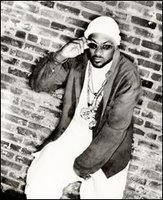 As one of the original members of the seminal '90s rap crew The Wu-Tang Clan, Ghostface Killah (aka Tony Starks) made an impact before he released his debut album, Ironman, late in 1996. Like all members of The Wu-Tang Clan, the rapper used the group as a launching pad for a solo career, which was assisted greatly by other members of the Clan, particularly producer RZA. Ghostface Killah had rapped on Wu-Tang's 1993 debut, Enter The Wu-Tang, but he didn't distinguish himself until 1995, when he was showcased on fellow Wu member Raekwon's Only Built 4 Cuban Linx. Ghostface received good reviews for his appearance on the record, and his contribution to the soundtracks for Sunset Park and Don't Be a Menace to South Central While You're Drinking Your Juice in the Hood also were well-received. All of these guest appearances and soundtrack contributions set the stage for Ghostface Killah's solo debut, Ironman, in late 1996. Like all Wu-Tang projects, it was produced by RZA and was quite successful in the large hip-hop/rap underground, debuting at number two on the pop charts upon its release. Ironman was also the first album to be released on Razor Sharp Records, RZA's record label on Epic Records. Work with The Wu-Tang and their various members kept Ghostface Killah busy until solo singles started appearing at the end of 1999 followed by his sophomore full-length, Supreme Clientele, in early 2000. Supreme Clientele was a success, but it was followed a year later by Bulletproof Wallets, an album that didn't sell well and had fans declaring the Ironman had gone soft. Once again it was back to The Wu for a couple years before the rapper would be appearing solo again. Epic issued the compilation Shaolin's Finest in April of 2003, and by the end of the year two new Ghostface tracks had started to appear on mixtapes. The chaotic "Run" with Jadakiss and the more commercial "Tush" with Missy Elliot raised the anticipation for the rapper's first album for Def Jam and his first under the simpler moniker Ghostface. The Pretty Toney Album hit the streets in April of 2004. The Top Ten hit Fishscale followed in 2006, but not before 718, an album from his Theodore Unit.


 Most of the members of rap's Roman Empire, the Wu-Tang Clan, experienced sophomore slumps with their second solo releases, whether artistically or commercially (usually both). The second offerings from Method Man, Ol' Dirty Bastard, GZA, and Raekwon featured some of the old Wu magic, but not enough to warrant a claim to their once total mastery of the rap game. Just as the Wu empire appeared to be crumbling, along came the second installment from the Clan's spitfire element, Ghostface Killah (aka Tony Starks, aka Ironman). Every bit as good as his first release, Supreme Clientele proves Ghost's worthiness of the Ironman moniker by deftly overcoming trendiness to produce an authentic sound in hip-hop's age of bland parity. Some of the Wu's slump could be contributed to Wu-Abbott's (aka RZA) relative sabbatical. This album has RZA's stamp all over it, but the guru himself only provides three tracks. On this effort, the Wu-Pupil producers at times seem to outdo their teacher. RZA's best composition is the piano-driven, double-entendre-laced childhood retrospective "Child's Play." But of the many standout cuts, it's the slew of disciple producers paying homage to the Wu legacy that truly makes this album fresh-sounding: "Apollo Kids" (Hassan), "Malcolm" (Choo the Specialist), "Saturday Nite" (Carlos "Six July" Broady), "One" (JuJu of the Beatnuts), "Cherchez la Ghost" (Carlos Bess), "Wu Banga 101" (Allah Mathematics). While the album is complete and characteristically Wu-sounding, each track is distinctive lyrically, thematically, and sonically. Ghostface's Supreme Clientele is a step toward the Wu-Tang Clan's ascent from the ashes of their fallen kingdom. The once slumbering Wu-Tang strikes again.
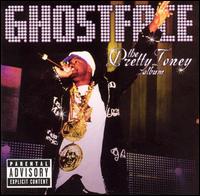

 Loosely speaking, More Fish is to Fishscale what Theodore Unit's 718 was to The Pretty Toney Album, albeit with more focus on Ghostface. While the title of this disc seems synonymous with Have Some Leftovers, it's not at all stale, if not nearly as spectacular as its precursor. Again, Ghostface showcases Trife da God, Cappadonna, Shawn Wigs, and Solomon Childs, while Sun God (Ghostface's son), Killa Sin, Sheek Louch, Redman, and a few others also assist. Ghost goes it alone on four tracks, and three others are left strictly in the hands of his protégés. With the exception of weak link Wigs, each one of them continues to improve. Unsurprisingly, Ghostface's performances are never outstripped by those of the other MCs, and no track — with the exception of the tacked-on "Back Like That" remix — makes any kind of commercial concession. Since Fishscale wasn't even close to going gold at the time of the disc's release, it's obvious that More Fish was issued to get the instant sales of Ghost's devout fanbase. "Guns 'n' Razors," "Outta Town Sh*t," and "Block Rock" generate the trademark breakneck high adventure, with Ghost on full, furious blast. Apropos of nothing, one of "Block Rock"'s tangents is an amped-up dismissal of Lil Jon: "If Little Jon could ice his cup, I'd chop that sh*t, it'd ice my nuts." After that, the intensity drops for several tracks, regained temporarily by "Alex (Stolen Script)," where Ghost makes the life of a fledgling movie mogul sound as dramatic and nearly as twisted as the crack trade. In the "too much information" department: when, in "Street Opera," Ghost recalls exploits shared with his son, "We ran trains for hours up in the Days Inn" probably has nothing to do with a dictionary's definition of "train" (unless, of course, your source is
