Saturday, April 14, 2007

Eric B & Rakim

They never had a mainstream hit of their own, but during rap's so-called golden age in the late '80s, Eric B. & Rakim were almost universally recognized as the premier DJ/MC team in all of hip-hop. Not only was their chemistry superb, but individually, each represented the absolute state of the art in their respective skills. Eric B. was a hugely influential DJ and beatmaker whose taste for hard-hitting James Brown samples touched off a stampede through the Godfather of Soul's back catalog that continues up to the present day. Rakim, meanwhile, still tops fan polls as the greatest MC of all time. He crafted his rhymes like poetry, filling his lines with elaborate metaphors and complex internal rhymes, and he played with the beat like a jazzman, earning a reputation as the smoothest-flowing MC ever to pick up a mic. His articulation was clear, his delivery seemingly effortless, and his influence on subsequent MCs incalculable. Together, their peerless technique on the microphone and turntables upped the ante for all who followed them, and their advancement of hip-hop as an art form has been acknowledged by everyone from Gang Starr to the Wu-Tang Clan to Eminem. While certain elements of their sound might come off as slightly dated today, it's also immediately clear how much of a hand Eric B. & Rakim had in leading hip-hop into the modern age.Eric B. was born Eric Barrier in 1965 in Elmhurst, Queens; his future partner, William Griffin, Jr., was born in 1968 and also hailed from the suburbs of New York, specifically Wyandanch, Long Island. At age 16, Griffin converted to Islam and adopted the name Rakim Allah. Barrier played trumpet and guitar early on, but switched to the turntables in high school, and eventually landed a job as the mobile DJ for radio station WBLS. It was there that he met Rakim, and the two officially formed a partnership in 1985. Their first single — "Eric B. Is President" (an ode to Barrier's DJ skills) b/w "My Melody" — was released on the tiny Harlem-based indie label Zakia. It was a street-level sensation during the summer of 1986, and the duo was picked up by the larger 4th & Broadway imprint. The equally monumental singles "I Ain't No Joke" and "I Know You Got Soul" sampled James Brown and his cohort Bobby Byrd, respectively, and their utter funkiness began to revolutionize the sound of hip-hop. Moreover, Rakim's line "pump up the volume" on the latter track was in turn sampled itself, becoming the basis for M/A/R/R/S' hit of the same name.In 1987, 4th & Broadway issued the duo's full-length debut, Paid in Full; accompanied by a mighty underground buzz, the record climbed into the Top Ten on the R&B LP charts (as would all of their subsequent albums). Additionally, the British DJ duo Coldcut remixed the title cut into a bona fide U.K. smash. The exposure helped make "Paid in Full"'s drum track one of the most sampled beats this side of James Brown's "Funky Drummer"; it provided the foundation for Milli Vanilli's "Girl You Know It's True," among many other, more credible hits. On the heels of Paid in Full, Eric B. & Rakim signed with MCA subsidiary Uni and consolidated their reputation with another landmark hip-hop album, 1988's Follow the Leader. The title cut took its place among the classic singles already in their canon, and Jody Watley soon tapped the duo for a guest spot on her 1989 single "Friends," which brought them into the pop Top Ten for the first and only time.The 1990 follow-up Let the Rhythm Hit 'Em proved relatively disappointing from a creative standpoint, although 1992's slightly jazzier Don't Sweat the Technique was a more consistent affair that bolstered their legacy. As it turned out, the record also completed that legacy. The duo's contract with MCA was almost up, and they had discussed the possibility of each recording a solo album. Unfortunately, the resulting tension over the future of their partnership ultimately destroyed it. In the aftermath of the breakup, various legal issues prevented both parties from starting their solo careers for quite some time. The only recording to appear was Rakim's first solo cut, "Heat It Up," which was featured on the soundtrack of the 1993 film Gunmen. Finally, in 1995, Eric B. issued his self-titled solo debut on his own 95th Street label. Rakim, meanwhile, signed with Universal and delivered a pair of acclaimed comeback albums, 1997's The 18th Letter and 1999's The Master.

Eric B & Rakim - Paid in Full (1987: 4th & Broadway)
One of the most influential rap albums of all time, Eric B. & Rakim's Paid in Full only continues to grow in stature as the record that ushered in hip-hop's modern era. The stripped-down production might seem a little bare to modern ears, but Rakim's technique on the mic still sounds utterly contemporary, even state-of-the-art — and that from a record released in 1987, just one year after Run-D.M.C. hit the mainstream. Rakim basically invents modern lyrical technique over the course of Paid in Full, with his complex internal rhymes, literate imagery, velvet-smooth flow, and unpredictable, off-the-beat rhythms. The key cuts here are some of the most legendary rap singles ever released, starting with the duo's debut sides, "Eric B. Is President" and "My Melody." "I Know You Got Soul" single-handedly kicked off hip-hop's infatuation with James Brown samples, and Eric B. & Rakim topped it with the similarly inclined "I Ain't No Joke," a stunning display of lyrical virtuosity. The title cut, meanwhile, planted the seeds of hip-hop's material obsessions over a monumental beat. There are also three DJ showcases for Eric B., who like Rakim was among the technical leaders in his field. If sampling is the sincerest form of admiration in hip-hop, Paid in Full is positively worshipped. Just to name a few: Rakim's tossed-off "pump up the volume," from "I Know You Got Soul," became the basis for M/A/R/R/S' groundbreaking dance track; Eminem, a devoted Rakim student, lifted lines from "As the Rhyme Goes On" for the chorus of his own "The Way I Am"; and the percussion track of "Paid in Full" has been sampled so many times it's almost impossible to believe it had a point of origin. Paid in Full is essential listening for anyone even remotely interested in the basic musical foundations of hip-hop — this is the form in its purest essence.

Eric B & Rakim - Follow the Leader (1988: UNI)
Having already revolutionized hip-hop, Eric B. & Rakim came up with a second straight classic in their sophomore album, Follow the Leader, which basically follows the same blueprint for greatness, albeit with subtle refinements. Most noticeably, Eric B.'s production is already moving beyond the minimalism of Paid in Full. Follow the Leader finds him changing things up more often: dropping in more samples, adding instruments from musician Stevie Blass Griffin, and generally creating a fuller sound over his rock-solid beats. It's still relatively spare, but the extra sonic weight helps keep things fresh. For his part, Rakim wasn't crowned the greatest MC of all time for the variety of his lyrical content, and Follow the Leader is no different. Yet even if he rarely deviates from boasting about his microphone prowess (and frankly, he's entitled), he employs uncommonly vivid and elaborate metaphors in doing so. A case in point is "Microphone Fiend," which weaves references to substance addiction throughout in explaining why Rakim can't keep away from the mic. The album-opening title cut is one of his most agile, up-tempo lyrical showcases, demonstrating why he's such a poetic inspiration for so many MCs even today. "Lyrics of Fury" manages to top it in terms of sheer force, using the break from James Brown's "Funky Drummer" before it saturated the airwaves. And, of course, there are several more turntable features for Eric B. Follow the Leader may not have broken much new ground, but it captures one of the greatest pure hip-hop acts at the top of its form, and that's enough to make the album a classic.

Eric B & Rakim - Let the Rhythm Hit 'Em (May 1990: MCA)
One thing the rap audience will never be accused of is having the world's longest attention span. Even some of the most celebrated hip-hoppers can fade in popularity after only a few albums. Eric B. & Rakim were extremely popular in the mid- to late '80s, but by 1990, rap buyers were starting to lose interest in them. Not much different from Paid in Full or Follow the Leader, Let the Rhythm Hit 'Em makes rapping technique its number one priority. At time when West Coast MCs like Ice-T and Ice Cube were mainly interested in getting a political message across, Rakim's goal was showing how much technique he had. Rakim may rap in a deadpan tone, but "Step Back," "No Omega," and other tunes leave no doubt that he had sizable chops. There are a few message raps (including "In the Ghetto"), although Rakim spends most of his time finding tongue-twisting ways to boast and brag about his microphone skills. The overall result is a CD that is enjoyable, yet limited.


Eric B & Rakim - Don't Sweat the Technique (1992: MCA)
Starting with their 1986 debut, Paid in Full, Eric B. and Rakim earned raves for Eric B.'s often flawless, judicious productions and Rakim's serious yet relentlessly rhythmic rhyming style. This 1992 album finds the duo picking up from where they left off of 1990's Let the Rhythm Hit 'Em. "What's on Your Mind" has Rakim with intents to woo under a bubbling track with an adroit interpolation of D Train's 1983 hit of the same name. That track aside, Don't Sweat the Technique has Rakim in bleak spirits as thoughts of combat, revenge, and unfortunate "accidents" are not far from his mind. "Casualties of War" has Rakim as an all-purpose psycho with the unsettling hook, "I get a rush when I see blood and dead bodies on the floor." Although it's supposed to be gripping, the thought of a war-ravaged Rakim with his pistols blazing after hearing a truck backfiring is hilarious. All of Don't Sweat the Technique would be more disturbing if it wasn't for the brilliant ear of Eric B. who can cut the tension and exact magic out of a going-nowhere track. Although the lyrics and premise of "What's Going On" aren't extremely sharp, the cracking snare drums and low bass riffs are a perfect compliment to Rakim's delivery. The title track is also jazz influenced, but not as potent as the Simon Law and Mr. Lee's Funky Ginger remixes that don't appear here. Like many albums of this type, Don't Sweat the Technique ends on tracks of little distinction but it is another strong effort from one of rap's most respected acts.

Stay on tune...As Salaam Aleikum

Thursday, April 05, 2007

Redman

After Erick Sermon (of the seminal rap group EPMD) spotted Redman freestyling in a New York nightclub, Sermon added him to the Hit Squad crew of aspiring MCs (along with K-Solo and Das EFX). Redman made his rapping debut on the EPMD songs "Hardcore" and "Brothers On My Jock" off their third album Business As Usual (Def Jam 1990). Redman's 1992 Def Jam debut Whut? Thee Album broke into the US Top 50, achieved gold status in the United States. Prominent hip hop magazine The Source subsequently named Redman the Rap Artist of the Year for 1993. Redman's solo career continued throughout the remainder of the decade, with each of his albums selling at least half a million copies. His musical style has remained very consistent, rarely deviating from a combination of Redman's unique braggadocious wit and hard, P-funk-influenced beats. In addition to releasing albums under his own name, he is part of the group Def Squad (along with Keith Murray and Erick Sermon) with whom he released the 1998 album El Niño, and also has formed a close partnership with labelmate Method Man (of the Wu-Tang Clan) with whom he released the 1999 album Blackout!. New Jersey rapper Redman made his initial impact with Whut? Thee Album in 1992. He blended reggae and funk influences with topical commentary and displayed a terse, though fluid rap style that was sometimes satirical, sometimes tough, and sometimes silly. Redman returned in 1994 with his second album, Dare Iz a Darkside, which was a harder album than his debut. Muddy Waters, Redman's third album, followed in 1996; he returned two years later with Doc's da Name. The 1999 album Blackout! was a collaboration with Method Man while 2001's Malpractice was another solo effort. Soundtrack appearances, acting (most notably a starring role in the film How High), and collaborations (including an appearance on Christina Aguilera's hit single "Dirrty") kept Redman away from his solo career until 2007, when Red Gone Wild arrived.

Whut? Thee Album is a terrific debut that established Redman as one of the top MCs on the East Coast. His aggressive delivery is more than hardcore enough for the streets, but Whut? is first and foremost a party record. Redman's subject matter centers around his love of funk and his equal love of pot, with some sex and violence thrown in for good measure. He's able to carry it all off with a singular sense of style, thanks to a wild sense of humor that results in some outlandish boasts, surreal threats, and hilarious left-field jokes. In "Blow Your Mind," for example, he announces, "watch me freak it in Korean!," stumbles through part of a verse, and mutters "ah, forget it"; another great moment is "Redman Meets Reggie Noble," a brief duet between himself and his own alter ego in the great Slick Rick tradition. Other offbeat highlights include the genuinely useful instructional track "How to Roll a Blunt" and the hilarious sexcapade story song "A Day With Sooperman Lover." Credit for the album's infectious vibe also has to go to producer Erick Sermon, who fills Whut? with deep, loose-limbed beats cribbed from P-Funk and Zapp. Slamming party jams like "Time 4 Sum Aksion," "Rated R," and "Watch Yo Nuggets" are the real meat and potatoes of the record, and Redman's driving, forceful rhyme style makes them all the more invigorating. Still the strongest, most consistent outing in his catalog, Whut? Thee Album clearly heralds the arrival of a major talent.

Redman - Dare Iz a Darkside (Nov 22, 1994: Def Jam)
Redman may have become a household name among the rap community by the end of the '90s, but there was a time when he garnered little more than a cult following. Why? Well, Dare Iz a Darkside illustrates this better than any of his other '90s albums — nowhere else has Redman ever been this odd, to be quite frank. It's fairly evident here that he'd been listening to his George Clinton records and that he wasn't fronting when he alluded to "A Million and 1 Buddah Spots" that he'd visited. In fact, this album often divides his fans. Many admire it for its eccentricities, while others deride it for being quite simply too inaccessible. It's almost as if Redman is trying to puzzle listeners on Dare Iz a Darkside with his continually morphing persona. In fact, there's actually little questioning his motives — it's a matter of fact that Redman's trying to be as crazy as he can without alienating too many of those who first knew him for his affiliation with EPMD. And while that affiliation does aid this album, since Erick Sermon plays a large role in production, it's not quite enough. If this album has one unforgivable flaw besides the debatable quirks in Redman's persona, it's the production. Sermon isn't up to his usual standards here, unfortunately, and the album could really use some of his trademark funk. But the reason most fans either feel devotion or disdain for this album isn't the beats, but rather Redman's antics. If you appreciate his wacky sense of insane humor, this album is a gold mine. If you're more into his latter-day Method Man-style rhymes, then this album probably isn't one you want to bother with. After all, though Redman became a household name by the end of the '90s, it surely wasn't because of albums like this.

Redman - Muddy Waters (Dec 10, 1996: Def Jam)
Despite a heavy dose of Redman's eccentric humor, Dare Iz a Darkside often threatened to disappear in a haze of blunt smoke, so for his third album, he and producer Erick Sermon backed off the muddled sonics of Darkside and returned to the hard funk of his debut set. There isn't as blatant a P-Funk/Zapp influence on Muddy Waters; the beats are more indebted to the new New York hardcore movement, and the tracks themselves are sparer and more bass-driven. Lyrically, Redman is as strong as ever, and if his subject matter hasn't changed all that much, he's still coming up with clever metaphors and loose, elastic rhyme flows. He projects more energy than Method Man (who appears on "Do What Ya Feel"), but isn't quite at the madman level of Busta Rhymes. The numerous skits tend to drag the album's momentum down a little, but overall, Muddy Waters solidifies Redman's growing reputation as one of the most consistent rappers of the '90s — even when the music is unspectacular, he manages to deliver the goods on the microphone.

Redman - Doc's Da Name 2000 (Nov 24, 1998: Def Jam)
In 1998, rap music experienced a high level of commercial acceptance and exploitation, the magnitude of which had scarcely been seen before. Most major record labels embraced artists whose images and portrayals revolved around financial decadence, violence, and substance abuse. These are issues that have always been somewhere in the mix of hip-hop culture, but in the late '90s such subjects took total precedence over previously, at least equally, appreciated subjects such as lyrical agility, humor, positivity, and self-awareness. Redman represents a few of these attributes — humor and lyrical agility in particular — on Doc's da Name 2000. The sound Redman achieves on this album is characteristic of his previous albums. With production credits going mostly to Erick Sermon, the bass-intensive and melodic beats on Doc's da Name 2000 allow Redman to deliver the raw Newark, NJ, flow for which he's known and liked. Redman produced a few of the songs on this album, including "Jersey Yo!." A mildly funny skit that describes the attitude of a certain "Little Bricks" resident precedes this selection. There are actually five skits on the album, which, like most skits on an often-played album, become very unfunny after a few repetitions. On "Jersey Yo!" Redman uses a slow and funky guitar sound over tight drums and a fluid bassline. Redman is also responsible for the production of "Da Goodness," a song that features Busta Rhymes. The instrumentation in this song has a futuristic, almost minimal, sound that mimics the music Busta Rhymes frequently flows over. Not stopping there, Redman spits lyrics in "Da Goodness" with what could be identified as Busta's lyrical style — and he does it well. The result is an entertaining song that exemplifies Redman's skill as a talented lyricist and producer. "Beet Drop," another cut produced by Redman, is a brief but funny cover of the Beastie Boys' "It's the New Style." Other MCs that join Redman here include Method Man on "Well All Rite Cha"; Double O, Tame, Diezzel Don, Gov-Mattic, and Young Z (of the Outsiders) on "Close Ya Doorz"; Markie and Shooga Bear on "My Zone!"; and Erick Sermon and Keith Murray on "Down South Funk." Fans should note that the latest episode of "Sooperman Lova (IV)" is witness to "sooperman lova switching to sooperman villain." The last selection on this album is a gem — a rhyme delivered over a jungle (aka drum'n'bass) rhythm track that was produced by the well-known Roni Size. A close look at the liner notes reveals an additional unique item on Doc's da Name 2000: Redman had A&R, marketing, and project coordination responsibilities on this album — a scenario not often seen in the music industry.

Redman - Malpractice (May 22, 2001: Def Jam)
During the three-year gap separating Redman's previous album, Doc's da Name 2000 (1998), from Malpractice, the crazed New Jersey rapper became a bona fide superstar thanks to his collaboration with the ubiquitous and ridiculously recognized Method Man. It now seems that the same sort of excessively brash attitude that somewhat burdens Method Man's superstar ego has become a staple of Redman's as well. That sort of lazy overconfidence often leads to effortless redundancy — this is a problem that creeps into Malpractice. After nearly a decade, Redman's countless skits and his ever-wacky but still-the-same antics just don't seem as fresh and amusing as they once were. Furthermore, with his newfound Method Man-like arrogance, his old tricks seem even tougher to stomach. It'd be different if Redman took a Missy Elliott-like approach to Malpractice and made an effort to continually flip styles and keep things fresh with each album. That's not the case, though. Rather, he turns in a repeat performance of his last few solo albums. Erick Sermon again crafts a number of the beats, and Redman returns to many of the same lyrical motifs that fueled his past work. So, in a sense, you can commend Redman for his consistency; after all, his rhymes are always a grin and he even produces a good chunk of Malpractice. Unfortunately, if you've heard his previous albums, this is going to feel very familiar. It's guests like George Clinton and the aforementioned Missy Elliott who keep things fresh, and there's no shortage of guests here, but even they can't salvage the record's déjà vu feeling. It's not easy criticizing Malpractice, since it is a relatively strong album with some nice moments such as the lead single, "Let's Get Dirty." But being Redman's fifth solo album, you expect a little more growth; instead you get what feels like a repeat performance.


Redman - Red Gone Wild: Thee Album (March 27, 2007: Def Jam Recordings)
Back once again with the ill behavior, Redman's Red Gone Wild: Thee Album is the kind of bumpy ice cream van ride through the ghetto that fans crave. The wit is there and as strong as ever with lines Kool Keith would salivate over like "I'm in my underwear like Damon Wayans in Colors" ("Pimp Nutz") or "My bitch be like 'damn, baby, wash your feet'/She say the hair on my chest look like taco meat" ("Sumtn 4 Urrbody") or a whole bunch of others that are way too nasty to repeat. Old friends like Def Squad kingpins Keith Murray and Erick Sermon are on the guest list along with a whole honor roll of old-schoolers who all feel as vital as ever. Producer Pete Rock brings a piano and horn banger to the album ("Gimme One"), Timbaland is more aggressive than usual with his beat ("Put It Down"), and Scott Storch mashes the Neptunes and Kraftwerk sounds with his inspired loops ("Freestyle Freestyle"), but as big and as diverse as the guest list is, the album hangs and flows effortlessly. It has everything to do with Red's bottomless bag of punch lines and his uplifting spirit, which could make you smile even as he's verbally cutting you to pieces. You could argue that the blaxploitation-flavored "Soopaman Luva" suite would be a better ending than the raw party starter "Suicide," but that's about it, unless you think party song followed by smoking song is redundant, which probably means you wouldn't enjoy any Redman album. That he's able to throw it back to the good old days after all this time, fame, and his ventures into other media just speaks to how much natural talent lives inside the man. How he makes it look so easy and backs up every outrageous claim of domination with whip-smart proof is nothing short of stunning.

---------------------------------------------------------------------------------
Mixtapes & EP


Tuesday, March 06, 2007

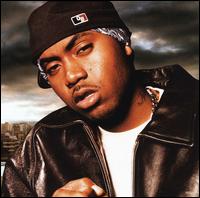
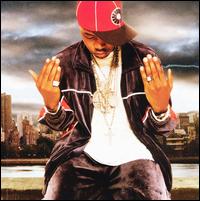
Nas (Nasir Jones; Sep 14, 1973; Queens, NY)

Heralded instantly as one of New York's leading rap voices, Nas expressed an outspoken, self-empowered swagger that rallied the streets of his city and elsewhere. Whether proclaiming himself "Nasty Nas" or "Nas Escobar" or "Nastradamus" or "God's Son," the self-appointed King of New York battled numerous adversaries for his position atop the epicenter of East Coast rap, none more noteworthy than Jay-Z, who vied with Nas for the vacated throne left in the wake of The Notorious B.I.G.'s 1997 assassination. Such headline-worthy drama informed Nas' provocative rhymes, which he delivered with both a masterful flow and a wise perspective over breathtaking beats by amazing producers: legends like DJ Premier, Large Professor, and Pete Rock; hitmakers like Trackmasters, Timbalanda, and Dr. Dre; street favorites like Swizz Beatz, Megahertz, and The Alchemist; and personal favorites of his own like L.E.S., Salaam Remi, and Chucky Thompson. Nas likewise collaborated with some of the industry's leading video directors like Hype Williams and Chris Robinson, presenting singles like "Hate Me Now," "One Mic," and "I Can" with dramatic flair. Throughout all the ups (the acclaim, popularity, and success) and all the downs (the pressure, adversaries, and over-reaching), Nas continually matured as an artist, evolving from a young street disciple to a vain all-knowing sage to a humbled godly teacher. Such growth made every album release an event and prolonged his increasingly storied career to epic proportions. Born Nasir Jones, son of jazz musician Olu Dara, Nas dropped out of school in the eighth grade, trading classrooms for the streets of the rough Queensbridge projects, long fabled as the former stomping ground of Marley Marl and his Juice Crew as immortalized in "The Bridge." Despite dropping out of school, Nas developed a high degree of literacy that would later characterize his rhymes. At the same time, though, he delved into street culture and flirted with danger, such experiences similarly characterizing his rhymes. His synthesis of well-crafted rhetoric and street-glamorous imagery blossomed in 1991 when he connected with Main Source and laid down a fiery verse on "Live at the Barbeque" that earned him instant respect among the East Coast rap scene. Not long afterward, MC Serch of 3rd Bass approached Nas about contributing a track to the Zebrahead soundtrack. Serch was the soundtrack's executive producer and, like much of New York, had been impressed by "Live at the Barbeque." Nas submitted "Halftime," and the song so stunned Serch that he made it the soundtrack's leadoff track.

Often cited as one of the best hip-hop albums of the '90s, Illmatic is the undisputed classic upon which Nas' reputation rests. It helped spearhead the artistic renaissance of New York hip-hop in the post-Chronic era, leading a return to street aesthetics. Yet even if Illmatic marks the beginning of a shift away from Native Tongues-inspired alternative rap, it's strongly rooted in that sensibility. For one, Nas employs some of the most sophisticated jazz-rap producers around: Q-Tip, Pete Rock, DJ Premier, and Large Professor, who underpin their intricate loops with appropriately tough beats. But more importantly, Nas takes his place as one of hip-hop's greatest street poets — his rhymes are highly literate, his raps superbly fluid regardless of the size of his vocabulary. He's able to evoke the bleak reality of ghetto life without losing hope or forgetting the good times, which become all the more precious when any day could be your last. As a narrator, he doesn't get too caught up in the darker side of life — he's simply describing what he sees in the world around him, and trying to live it up while he can. He's thoughtful but ambitious, announcing on "N.Y. State of Mind" that "I never sleep, 'cause sleep is the cousin of death," and that he's "out for dead presidents to represent me" on "The World Is Yours." Elsewhere, he flexes his storytelling muscles on the classic cuts "Life's a Bitch" and "One Love," the latter a detailed report to a close friend in prison about how allegiances within their group have shifted. Hip-hop fans accustomed to 73-minute opuses sometimes complain about Illmatic's brevity, but even if it leaves you wanting more, it's also one of the few '90s rap albums with absolutely no wasted space. Illmatic is a great lyricist, in top form, meeting great production, and it remains a perennial favorite among serious hip-hop fans.

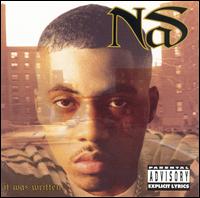
Nas - It Was Written (Jul 2, 1996; Columbia)
For his second album, It Was Written, Nas hired a bunch of hip-hop's biggest producers — including Dr. Dre, DJ Premier, Stretch, and Trackmasters — to help him create the musical bed for his daring, groundbreaking rhymes. Although that rhyme style isn't as startling on It Was Written as it was on his debut, Illmatic, Nas has deepened his talents, creating a complex series of rhymes that not only flow, but manage to tell coherent stories as well. Furthermore, Nas often concentrates on creating vignettes about life in the ghetto that never are apolitical or ambivalent. This time around, the production is more detailed and elaborate, which gives the music a wider appeal. Sometimes this is a detriment — Nas sounds better when he tries to keep it street-level — but usually, his lyrical force cuts through the commercial sheen. Combined with the spare but deep grooves, his rhymes have a resonance unmatched by most of his mid-'90s contemporaries. Because, no matter how deep his lyrics are, his grooves are just as deep and those bottomless funk and spare beats are what make It Was Written so compulsively listenable.
I Am... is the third album and fourth stage in the evolution of Queensbridge's living legend Nasir Jones, from Nasty Nas to Nas to Nas Escobar to Nastradamus, the soothsaying mega-thug poet. This third installment is an introspective work from one of hip-hop's made men. Always billed as a hip-hop messiah, Nas rose through the ranks of hip-hop on the strength of powerful poetry. Contrary to the album's title, the scope of the work extends beyond the autobiography as Nas takes on politics, the state of hip-hop, Y2K, race, and religion with his own unique perspective. While Illmatic was Nas at his rawest and It Was Written was Nas' attempt to reconcile his underground leanings with his newfound fame, acclaim, and wealth, the Nas of I Am... is honest about his elevated status yet still feels the tension of no longer being ravenous on the mic. Musically, I Am is somewhat unimaginative by Nas' stratospheric standards. Tried and true producers, The Trackmasters stamp the album with their signature catchy grooves and samples, but some of these tracks lack the sonic depth to do justice to the prophecies of the pharaoh, Nas. Superproducer Premier comes to save the day on two outstanding tracks: "NY State of Mind, Pt. II" and "Nas Is Like." These two cuts are nothing short of Illmatic perfection. "Nas Is Like"'s symphonic composition is the perfect complement for an MC of Nas' supreme vocal quality and precise lyrics. Despite some of the blandness on the production end, Nas still shines as the old soul storyteller and crime rhyme chronicler on cuts like "We Will Survive," a dirge for fallen rappers. Nas also experiments stylistically on "Big Things," sporting a Midwest cadence, and on "You Won't See Me Tonight," a Timbaland-produced duet with R&B songstress Aaliyah.

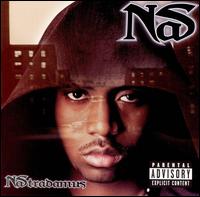
Nas - Nastradamus (Nov 23, 1999; Columbia)
From boy to man to king to prophet, Nas re-emerged six months after his third album with Nastradamus, a pre-millennial statement touching on the future, spirituality, and family — issues that Nas has broached before, though never with this much devotion. It could have been an intriguing concept album, but Nastradamus is continually compromised by tracks that don't contribute to the theme. For every emotional track like "Some of Us Have Angels" or "God Love Us," there are the same old street-life anthems you'd expect to hear, like "Shoot 'Em Up," "Come Get Me," or "You Owe Me." They sound OK (thanks to production from L.E.S., DJ Premier, and Timbaland), but the result is yet another drawn-out hip-hop album that wanders aimlessly and never really says anything. Nas' rapping is superb as usual, but for the most part it's a wasted effort.
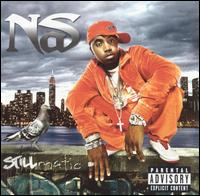
Back on the hardcore block and with plenty to prove after two years without a record under his own name, Nas designed Stillmatic as a response: to the rap cognoscenti who thought he'd become a relic, and most of all to Jay-Z, the East Coast kingpin who wounded his pride and largely replaced him as the best rapper in hip-hop. The saga started back in the summer of 2001 with the mixtape "Stillmatic," Nas' answer track to an on-stage dis by Jay-Z. A few months after Jay-Z countered with the devastating "Takeover," Nas dropped the comeback single "Ether" and the full album Stillmatic; tellingly, Jay-Z had already released his response to "Ether" (titled "Super Ugly") before Stillmatic even came out. Dropping many of the mainstream hooks and featured performers in order to focus his rapping, Nas proves he's still a world-class rhymer, but he does sound out of touch in the process of defending his honor. "Ether" relies on a deep-throat vocal repeating the phrase, "F*ck Jay-Z," while "You're da Man" hits the heights of arrogance with a looped vocal sample repeating the title over and over. "Destroy & Rebuild" is a solid defense of his Queensbridge home, and "Got Ur Self A..." is an outstanding track, the best here, complete with chant-along chorus. Despite the many highlights, a few of these tracks (most were produced by either Large Professor or Nas himself) just end up weighing him down: "Smokin'," one of the worst, is an odd G-funk track that would've sounded dated years before its release. Stillmatic certainly isn't as commercial as past Nas output, but it places him squarely behind the times. Facts are facts: He's not the best rapper in the business anymore.

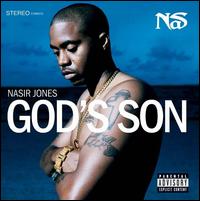
God's Son is an emotional album, imbued with recent experiences in Nas' personal life, particularly his recent bout with Jay-Z and the unfortunate death of his mother, Ann Jones. These experiences had challenged the self-reappointed King of New York, attacking both his street status and his heart, and he in turn looked within, embracing both his craft and his spirit. Brazenly declaring himself God's Son, in tribute partly to his mother's legacy as well as his own increasingly Jesus-like one, Nas emerged from his experiences wiser, stronger, and holier than ever, less engaged by the material world than the inner one, less interested in flossing than teaching, and less obsessed with his riches than his soul. And his soul he bares nakedly; profusely personal, Nas' lyrical divulgence is sometimes even startling: "Last Real Nigga Alive" name-drops Biggie, Jay-Z, Wu-Tang Clan, and other '90s-era rappers; "Hey Nas" reflects on recent failed relationships with women; "Dance" is an ode to his mother; and "Heaven" questions spirituality. As usual, there's a street-rallying leadoff single here, "Made You Look," that announces Nas' periodic return with fury and bombast. Salaam Remi produces the Marley Marl-fashioned track and lays down similarly inventive beats on four others. He's joined by many of the other producers who had worked on Stillmatic a year earlier: Chucky Thompson, Ron Browz, and The Alchemist, all of whom deliver harsh tracks without pop gimmickry. In addition, God's Son includes three noteworthy collaborations: Nas and 2Pac trade gentle verses on "Thugz Mansion," Alicia Keys contributes the production and hook to "Warrior Song," and Eminem produces "The Cross." Throughout it all, God's Son plays like an album. The playing time is reasonable, clocking under an hour, the song selection is diverse, no two tracks resembling one another, and the themes are interwoven, giving the album a narrative sense. God's Son isn't quite the masterpiece it could be — mostly because Nas is so self-involved, sometimes seemingly intoxicated by his kingliness — but it's surely one of the most remarkable albums of the Queensbridge rapper's highlight-filled career, just a notch or so below Illmatic and Stillmatic.

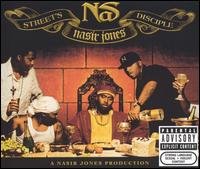
Nas - Street's Disciple (Nov 30, 2004; Sony Urban Music/Columbia)
Ten years deep in the rap game, Nas unveiled Street's Disciple, an indulgent album that sprawls across two discs, freewheeling through a dizzying array of ace productions and thoughtful raps. The album is very much a continuation of its predecessor, God`s Son: both helmed primarily by producers Salaam Remi and Chucky Thompson, both uncompromising personal statements that make few concessions to the pop market, and both undoubtedly fascinating, if overindulgent. The difference is, Street's Disciple goes a step further, indulging all the more in the creative whims of Nas. And, with the exception of some first-disc throwaways, the result is nothing short of astounding, especially if you've followed Nas over the course of his first decade. Catchy hooks are few and far between here, granted, with most of the songs crafted as if they were freestyle raps. This works, though, because Nas benefits from outstanding productions, a peerless rap style, and an interesting back-story. The 25 productions here are all courtesy of longtime Nas collaborators Salaam Remi, Chucky Thompson, and L.E.S., with only a couple exceptions (Nas produces a couple himself). These guys know Nas better than anyone, and they deliver the goods: hardcore beats for the streets, usually laced with an inventive sample for a hook effect. These riffs offer Nas ample room to let loose, and he does precisely that on one track after another, often touching upon a specific theme yet doing so in a loose, free-associative manner that highlights his talent for wordplay and storytelling. Within his raps, Nas often mines his own past, present, and future: for instance, he touches upon his heritage ("Bridging the Gap"), his impending marriage ("Getting Married"), his eventual death ("Live Now"), his influences ("U.B.R."), his most memorable female conquests ("Remember the Times"). All of this amounts to a lavish album sure to dazzle true hip-hop heads, who will find much to admire and study here, from the especially deep and twisted raps to the sample-rich productions. On the other hand, all of this also amounts to an album that might prove relatively impenetrable to those who aren't already attuned to the legacy of Nas. Either way, Street's Disciple is another key album in that ongoing legacy, further evidence that Nas is back on track after falling off during the late '90s with I Am and Nastradamus. It's not a perfect album — it's far too indulgent for that — and would have been stronger as a single disc, but its ambitious sprawl makes for a powerful statement that Nas disciples will surely savor.


Nas - Hip Hop Is Dead (Dec 19, 2006: Def Jam/Columbia)
Hip Hop Is Dead is not Illmatic. Illmatic stands as one of the most impressive debuts in rap music, and consequently has set up inevitable, and often unfavorable, comparisons with each of Nas' subsequent releases. And so it is practically a given that the two albums in fact do not compare, that the beats, the rhymes, the insight, the flow Mr. Jones had on Illmatic have not been duplicated here, and in all honestly, probably never will. Nas himself seems aware of this — though he would never admit it — as throughout the record he references the MCs, the producers, the DJs who made the music what it was and what it is today, many of whom were releasing material in the early '90s, when Nas first made a mark. He himself is one of them. The statement that "hip hop is dead" is clearly meant to be controversial, and was, as rappers and rap fans alike exploded into debate after Nas declared it to be the title of his next album. But it's also a statement that the MC doesn't completely adhere to. He flip-flops between declaring that it has already gone, to warning of its imminent departure, to promising "to carry on tradition," to resurrecting it. But these inconsistencies don't come from contradictions in Nas' beliefs; rather, they stem from the fact that his biggest problem with hip-hop has nothing to do with current talent, but what hip-hop itself has become — how it's magnified from an art form, from a way the ghetto expressed itself, into a commercialized, corporate entity that Nas himself is part of, something about which he feels more than a little guilty. This is most openly addressed on "Black Republican," which appropriately features an equally guilty (in terms of both improving and commercializing rap music) Jay-Z, who spits out better lines than anything he did on Kingdom Come. The track, which ingeniously samples "Marcia Religiosa" from The Godfather II (a film that, in many ways, parallels Nas' ideas about hip-hop as it deals with the dark side of making money and the problems that befall an overly zealous pursuit of the always crafty American Dream), finds both MCs lamenting the state of the genre while also acknowledging their own participation — and enjoyment — of what it's given them. "Black Republican" is an understanding and admittance of hypocrisy, and this sentiment continues in "Not Going Back" and "Carry on Tradition," the latter in which Nas rhymes, "We used to be a ghetto secret/Can't make my mind up if I want that/Or the whole world to peep it." Nas enjoys the fame, but he also realizes that it has hurt the very thing he loves most, his "first wifey."

Also check Outkast discog 2night...Enjoy!
As Salaam Aleikum...

Sunday, February 25, 2007

Keith Murray

A native of Long Island, Keith Murray first hooked up with Erick Sermon (of EPMD) in 1994. The two worked together to produce Murray's debut single, "The Most Beautifullest Thing in This World," and the song became a hit by the end of the year. After an appearance on Sermon's album, Double or Nothing, Keith Murray released his first album in 1995, and titled it after his hit single. The album was certified gold, and Murray delivered his second set near the end of 1996. It's a Beautiful Thing followed in 1999.Before Keith Murray ever recorded an album, he battled Big Daddy Kane, a man widely considered to be one of the greatest MCs of all time. At that time, Murray went by the name of MC Do Damage. Murray did not win the battle, but he did earn the respect of Kane. Later, Murray would be introduced to Erick Sermon of EPMD by K-Solo. Sermon would feature Murray on his album No Pressure. Murray quickly established himself as one of the most creative lyricists in the industry with his first album The Most Beautifullest Thing in This World, released in 1994 on Jive Records. The title track from this album remains Murray's biggest solo hit. This album was given 4 mics by The Source.Murray's second album Enigma was released in 1996 on Jive. It received similar ratings from critics, but it was not quite as commercially successful as the previous album. In 1998, The Def Squad covered "Rapper's Delight" by the Sugarhill Gang. They would later release their own album, El Nino. Murray's third album It's a Beautiful Thing was released in 1999 while he was in prison. Like the previous album, it received relatively good reviews, but it showed yet another drop in sales. Murray also appeared on the song "Home Alone" by R. Kelly. In 2001, Murray's return to the music industry was announced with a memorable verse on "Fatty Girl." This song was featured on The Good Life, a compilation of songs for Fubu.

Keith Murray - The Most Beautifullest Thing in This World (Nov 8, 1994: Jive)
Before he managed to get himself locked up for a brief bid later in the decade on an assault charge, Keith Murray was assaulting microphones and thesauruses alike with his ill "Sychosymatic" lyrical skills. Introduced to the rap world at the end of 1993 via a guest spot on the song "Hostile" off Erick Sermon's first solo album Double or Nothing, Murray stepped out on his own at the beginning of the next year with the mellow Sermon-produced hit single "The Most Beautifullest Thing in This World," then backed it up with a full-length debut by the same title. There is nothing new in Sermon's loping music that you couldn't get on EPMD albums or from other recordings by members of the Def Squad, although he did continue to bring the funk hot and viscous as always. The main attraction on The Most Beautifullest Thing in This World, then, is Murray's raw, emotionally charged flow and droll (though not as funny as Redman), articulate rhymes, straight out of the battle-rap school of hip-hop. His lyrics, in other words, are often tasty going down (particularly on "How's That" with Sermon and Redman and "Bom Bom Zee" with Paul Hightower and Hurricane Gee) but won't necessarily stick around to quell any sort of hunger. Still, the album went gold and is easily recommended for fans of Double or Nothing or Whut? Thee Album.

Keith Murray - Enigma (Nov 26, 1996: Jive)
With his second album Enigma, Keith Murray continues to improve his rhythmic skills, as demonstrated by the deft lyrical gymnastics he performs throughout the record. Murray's style of production is defiantly East Coast with its spare rhythms and emphasis on lyrical rhymes. This can make the record a little monotonous to some listeners, but his kinetic verbal energy keeps Enigma exciting and fresh.


Keith Murray - It's a Beautiful Thing (Jan 12, 1999: Jive) Keith Murray may have a distinctive rapping style, but that doesn't necessarily make for distinctive albums if his third album, It's a Beautiful Thing, is any indication. It's no coincidence that the title recalls Murray's high-water mark, "The Most Beautifullest Thing in the World" — the entire album is a self-conscious attempt to return to those glory days, which is ironic because he's never really changed his style over the years. Still, name-association means a lot, and that may be the reason why there do seem to be several highlights on It's a Beautiful Thing, since there are no real musical or lyrical breakthroughs anywhere on the album. Indeed, it's by-the-books Murray, which will undoubtedly satisfy some long-term fans, who only need new songs to keep their interest. The rest of the audience will find the album to be a bit uneven, despite his obvious flair for lyrical gymnastics (or maybe because of them, since many of his rhymes don't make sense, even in the absurdist sense) — the sounds aren't really new and only a handful of songs catch hold. There's enough to make It's a Beautiful Thing a reasonably entertaining listen, even if they aren't enough to make it memorable.

Keith Murray - He's Keith Murray (Apr 29, 2003: Def Jam)
After his gloriously fluky solo debut, "The Most Beautifullest Thing in This World," scaled the charts in 1994, Keith Murray's career went into a tailspin he still hadn't recovered from ten years later. His 1996 album Enigma sounded flat and sold poorly, and he began serving a prison term for second-degree assault just as 1999's It's a Beautiful Thing reached the stores. Three years later, after being released and signing to Def Jam in 2002, Murray was dropped from the label before He's Keith Murray even arrived, on charges that he'd choked two Def Jam employees. It did appear, finally, leaving fans of his eccentric take on East Coast rap just a little disappointed, especially so considering the long wait. Murray partially explains his situation with the autobiographical "Christina," relating not only his legal troubles but the early death of his parents and sister; unfortunately, the track isn't much more than a straight retelling, with little emotion and no context. The biggest hit here, "Yeah Yeah U Know It," is a solid party jam, but quite a few other crossover items fall flat: "Candi Bar" is a Latin pop throwaway that wastes Patti Austin as a backing vocalist (granted, it's partly saved by Murray's typically hilarious rhymes). Ironically, anyone who sticks with the record on the flip side will find a much better half, featuring a pair of tight, menacing Erick Sermon tracks ("Sucka Free," "Say Goodnite") and a Jazze Pha production on "Say Whaatt" that floats the perfect accompaniment to Murray's soundclash with Redman. Though his recordings have offered much to hip-hop fans tired of hearing the same old jams, Murray remains his own worst enemy — both at letting his temper off the mike get the best of him, and at allowing crossovers to force aside his best tracks.

Keith Murray - Kickin Ass Mixtape Vol.1

Enjoy & keep voting with new poll...As Salaam Aleikum