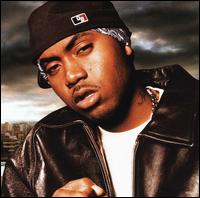
 Heralded instantly as one of New York's leading rap voices, Nas expressed an outspoken, self-empowered swagger that rallied the streets of his city and elsewhere. Whether proclaiming himself "Nasty Nas" or "Nas Escobar" or "Nastradamus" or "God's Son," the self-appointed King of New York battled numerous adversaries for his position atop the epicenter of East Coast rap, none more noteworthy than Jay-Z, who vied with Nas for the vacated throne left in the wake of The Notorious B.I.G.'s 1997 assassination. Such headline-worthy drama informed Nas' provocative rhymes, which he delivered with both a masterful flow and a wise perspective over breathtaking beats by amazing producers: legends like DJ Premier, Large Professor, and Pete Rock; hitmakers like Trackmasters, Timbalanda, and Dr. Dre; street favorites like Swizz Beatz, Megahertz, and The Alchemist; and personal favorites of his own like L.E.S., Salaam Remi, and Chucky Thompson. Nas likewise collaborated with some of the industry's leading video directors like Hype Williams and Chris Robinson, presenting singles like "Hate Me Now," "One Mic," and "I Can" with dramatic flair. Throughout all the ups (the acclaim, popularity, and success) and all the downs (the pressure, adversaries, and over-reaching), Nas continually matured as an artist, evolving from a young street disciple to a vain all-knowing sage to a humbled godly teacher.
 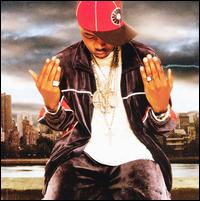 Such growth made every album release an event and prolonged his increasingly storied career to epic proportions. Born Nasir Jones, son of jazz musician Olu Dara, Nas dropped out of school in the eighth grade, trading classrooms for the streets of the rough Queensbridge projects, long fabled as the former stomping ground of Marley Marl and his Juice Crew as immortalized in "The Bridge." Despite dropping out of school, Nas developed a high degree of literacy that would later characterize his rhymes. At the same time, though, he delved into street culture and flirted with danger, such experiences similarly characterizing his rhymes. His synthesis of well-crafted rhetoric and street-glamorous imagery blossomed in 1991 when he connected with Main Source and laid down a fiery verse on "Live at the Barbeque" that earned him instant respect among the East Coast rap scene. Not long afterward, MC Serch of 3rd Bass approached Nas about contributing a track to the Zebrahead soundtrack. Serch was the soundtrack's executive producer and, like much of New York, had been impressed by "Live at the Barbeque." Nas submitted "Halftime," and the song so stunned Serch that he made it the soundtrack's leadoff track.
Often cited as one of the best hip-hop albums of the '90s, Illmatic is the undisputed classic upon which Nas' reputation rests. It helped spearhead the artistic renaissance of New York hip-hop in the post-Chronic era, leading a return to street aesthetics. Yet even if Illmatic marks the beginning of a shift away from Native Tongues-inspired alternative rap, it's strongly rooted in that sensibility. For one, Nas employs some of the most sophisticated jazz-rap producers around: Q-Tip, Pete Rock, DJ Premier, and Large Professor, who underpin their intricate loops with appropriately tough beats. But more importantly, Nas takes his place as one of hip-hop's greatest street poets — his rhymes are highly literate, his raps superbly fluid regardless of the size of his vocabulary. He's able to evoke the bleak reality of ghetto life without losing hope or forgetting the good times, which become all the more precious when any day could be your last. As a narrator, he doesn't get too caught up in the darker side of life — he's simply describing what he sees in the world around him, and trying to live it up while he can. He's thoughtful but ambitious, announcing on "N.Y. State of Mind" that "I never sleep, 'cause sleep is the cousin of death," and that he's "out for dead presidents to represent me" on "The World Is Yours." Elsewhere, he flexes his storytelling muscles on the classic cuts "Life's a Bitch" and "One Love," the latter a detailed report to a close friend in prison about how allegiances within their group have shifted. Hip-hop fans accustomed to 73-minute opuses sometimes complain about Illmatic's brevity, but even if it leaves you wanting more, it's also one of the few '90s rap albums with absolutely no wasted space. Illmatic is a great lyricist, in top form, meeting great production, and it remains a perennial favorite among serious hip-hop fans.
Nas - It Was Written (Jul 2, 1996; Columbia)
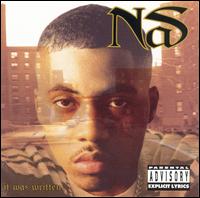 For his second album, It Was Written, Nas hired a bunch of hip-hop's biggest producers — including Dr. Dre, DJ Premier, Stretch, and Trackmasters — to help him create the musical bed for his daring, groundbreaking rhymes. Although that rhyme style isn't as startling on It Was Written as it was on his debut, Illmatic, Nas has deepened his talents, creating a complex series of rhymes that not only flow, but manage to tell coherent stories as well. Furthermore, Nas often concentrates on creating vignettes about life in the ghetto that never are apolitical or ambivalent. This time around, the production is more detailed and elaborate, which gives the music a wider appeal. Sometimes this is a detriment — Nas sounds better when he tries to keep it street-level — but usually, his lyrical force cuts through the commercial sheen. Combined with the spare but deep grooves, his rhymes have a resonance unmatched by most of his mid-'90s contemporaries. Because, no matter how deep his lyrics are, his grooves are just as deep and those bottomless funk and spare beats are what make It Was Written so compulsively listenable.
 I Am... is the third album and fourth stage in the evolution of Queensbridge's living legend Nasir Jones, from Nasty Nas to Nas to Nas Escobar to Nastradamus, the soothsaying mega-thug poet. This third installment is an introspective work from one of hip-hop's made men. Always billed as a hip-hop messiah, Nas rose through the ranks of hip-hop on the strength of powerful poetry. Contrary to the album's title, the scope of the work extends beyond the autobiography as Nas takes on politics, the state of hip-hop, Y2K, race, and religion with his own unique perspective. While Illmatic was Nas at his rawest and It Was Written was Nas' attempt to reconcile his underground leanings with his newfound fame, acclaim, and wealth, the Nas of I Am... is honest about his elevated status yet still feels the tension of no longer being ravenous on the mic. Musically, I Am is somewhat unimaginative by Nas' stratospheric standards. Tried and true producers, The Trackmasters stamp the album with their signature catchy grooves and samples, but some of these tracks lack the sonic depth to do justice to the prophecies of the pharaoh, Nas. Superproducer Premier comes to save the day on two outstanding tracks: "NY State of Mind, Pt. II" and "Nas Is Like." These two cuts are nothing short of Illmatic perfection. "Nas Is Like"'s symphonic composition is the perfect complement for an MC of Nas' supreme vocal quality and precise lyrics. Despite some of the blandness on the production end, Nas still shines as the old soul storyteller and crime rhyme chronicler on cuts like "We Will Survive," a dirge for fallen rappers. Nas also experiments stylistically on "Big Things," sporting a Midwest cadence, and on "You Won't See Me Tonight," a Timbaland-produced duet with R&B songstress Aaliyah.
Nas - Nastradamus (Nov 23, 1999; Columbia)
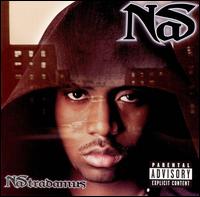 From boy to man to king to prophet, Nas re-emerged six months after his third album with Nastradamus, a pre-millennial statement touching on the future, spirituality, and family — issues that Nas has broached before, though never with this much devotion. It could have been an intriguing concept album, but Nastradamus is continually compromised by tracks that don't contribute to the theme. For every emotional track like "Some of Us Have Angels" or "God Love Us," there are the same old street-life anthems you'd expect to hear, like "Shoot 'Em Up," "Come Get Me," or "You Owe Me." They sound OK (thanks to production from L.E.S., DJ Premier, and Timbaland), but the result is yet another drawn-out hip-hop album that wanders aimlessly and never really says anything. Nas' rapping is superb as usual, but for the most part it's a wasted effort.
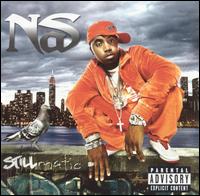 Back on the hardcore block and with plenty to prove after two years without a record under his own name, Nas designed Stillmatic as a response: to the rap cognoscenti who thought he'd become a relic, and most of all to Jay-Z, the East Coast kingpin who wounded his pride and largely replaced him as the best rapper in hip-hop. The saga started back in the summer of 2001 with the mixtape "Stillmatic," Nas' answer track to an on-stage dis by Jay-Z. A few months after Jay-Z countered with the devastating "Takeover," Nas dropped the comeback single "Ether" and the full album Stillmatic; tellingly, Jay-Z had already released his response to "Ether" (titled "Super Ugly") before Stillmatic even came out. Dropping many of the mainstream hooks and featured performers in order to focus his rapping, Nas proves he's still a world-class rhymer, but he does sound out of touch in the process of defending his honor. "Ether" relies on a deep-throat vocal repeating the phrase, "F*ck Jay-Z," while "You're da Man" hits the heights of arrogance with a looped vocal sample repeating the title over and over. "Destroy & Rebuild" is a solid defense of his Queensbridge home, and "Got Ur Self A..." is an outstanding track, the best here, complete with chant-along chorus. Despite the many highlights, a few of these tracks (most were produced by either Large Professor or Nas himself) just end up weighing him down: "Smokin'," one of the worst, is an odd G-funk track that would've sounded dated years before its release. Stillmatic certainly isn't as commercial as past Nas output, but it places him squarely behind the times. Facts are facts: He's not the best rapper in the business anymore.
 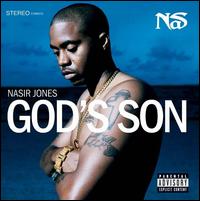 God's Son is an emotional album, imbued with recent experiences in Nas' personal life, particularly his recent bout with Jay-Z and the unfortunate death of his mother, Ann Jones. These experiences had challenged the self-reappointed King of New York, attacking both his street status and his heart, and he in turn looked within, embracing both his craft and his spirit. Brazenly declaring himself God's Son, in tribute partly to his mother's legacy as well as his own increasingly Jesus-like one, Nas emerged from his experiences wiser, stronger, and holier than ever, less engaged by the material world than the inner one, less interested in flossing than teaching, and less obsessed with his riches than his soul. And his soul he bares nakedly; profusely personal, Nas' lyrical divulgence is sometimes even startling: "Last Real Nigga Alive" name-drops Biggie, Jay-Z, Wu-Tang Clan, and other '90s-era rappers; "Hey Nas" reflects on recent failed relationships with women; "Dance" is an ode to his mother; and "Heaven" questions spirituality. As usual, there's a street-rallying leadoff single here, "Made You Look," that announces Nas' periodic return with fury and bombast. Salaam Remi produces the Marley Marl-fashioned track and lays down similarly inventive beats on four others. He's joined by many of the other producers who had worked on Stillmatic a year earlier: Chucky Thompson, Ron Browz, and The Alchemist, all of whom deliver harsh tracks without pop gimmickry. In addition, God's Son includes three noteworthy collaborations: Nas and 2Pac trade gentle verses on "Thugz Mansion," Alicia Keys contributes the production and hook to "Warrior Song," and Eminem produces "The Cross." Throughout it all, God's Son plays like an album. The playing time is reasonable, clocking under an hour, the song selection is diverse, no two tracks resembling one another, and the themes are interwoven, giving the album a narrative sense. God's Son isn't quite the masterpiece it could be — mostly because Nas is so self-involved, sometimes seemingly intoxicated by his kingliness — but it's surely one of the most remarkable albums of the Queensbridge rapper's highlight-filled career, just a notch or so below Illmatic and Stillmatic.
Nas - Street's Disciple (Nov 30, 2004; Sony Urban Music/Columbia)
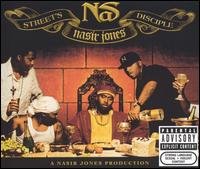 Ten years deep in the rap game, Nas unveiled Street's Disciple, an indulgent album that sprawls across two discs, freewheeling through a dizzying array of ace productions and thoughtful raps. The album is very much a continuation of its predecessor, God`s Son: both helmed primarily by producers Salaam Remi and Chucky Thompson, both uncompromising personal statements that make few concessions to the pop market, and both undoubtedly fascinating, if overindulgent. The difference is, Street's Disciple goes a step further, indulging all the more in the creative whims of Nas. And, with the exception of some first-disc throwaways, the result is nothing short of astounding, especially if you've followed Nas over the course of his first decade. Catchy hooks are few and far between here, granted, with most of the songs crafted as if they were freestyle raps. This works, though, because Nas benefits from outstanding productions, a peerless rap style, and an interesting back-story. The 25 productions here are all courtesy of longtime Nas collaborators Salaam Remi, Chucky Thompson, and L.E.S., with only a couple exceptions (Nas produces a couple himself). These guys know Nas better than anyone, and they deliver the goods: hardcore beats for the streets, usually laced with an inventive sample for a hook effect. These riffs offer Nas ample room to let loose, and he does precisely that on one track after another, often touching upon a specific theme yet doing so in a loose, free-associative manner that highlights his talent for wordplay and storytelling. Within his raps, Nas often mines his own past, present, and future: for instance, he touches upon his heritage ("Bridging the Gap"), his impending marriage ("Getting Married"), his eventual death ("Live Now"), his influences ("U.B.R."), his most memorable female conquests ("Remember the Times"). All of this amounts to a lavish album sure to dazzle true hip-hop heads, who will find much to admire and study here, from the especially deep and twisted raps to the sample-rich productions. On the other hand, all of this also amounts to an album that might prove relatively impenetrable to those who aren't already attuned to the legacy of Nas. Either way, Street's Disciple is another key album in that ongoing legacy, further evidence that Nas is back on track after falling off during the late '90s with I Am and Nastradamus. It's not a perfect album — it's far too indulgent for that — and would have been stronger as a single disc, but its ambitious sprawl makes for a powerful statement that Nas disciples will surely savor.
Nas - Hip Hop Is Dead (Dec 19, 2006: Def Jam/Columbia)
 Hip Hop Is Dead is not Illmatic. Illmatic stands as one of the most impressive debuts in rap music, and consequently has set up inevitable, and often unfavorable, comparisons with each of Nas' subsequent releases. And so it is practically a given that the two albums in fact do not compare, that the beats, the rhymes, the insight, the flow Mr. Jones had on Illmatic have not been duplicated here, and in all honestly, probably never will. Nas himself seems aware of this — though he would never admit it — as throughout the record he references the MCs, the producers, the DJs who made the music what it was and what it is today, many of whom were releasing material in the early '90s, when Nas first made a mark. He himself is one of them. The statement that "hip hop is dead" is clearly meant to be controversial, and was, as rappers and rap fans alike exploded into debate after Nas declared it to be the title of his next album. But it's also a statement that the MC doesn't completely adhere to. He flip-flops between declaring that it has already gone, to warning of its imminent departure, to promising "to carry on tradition," to resurrecting it. But these inconsistencies don't come from contradictions in Nas' beliefs; rather, they stem from the fact that his biggest problem with hip-hop has nothing to do with current talent, but what hip-hop itself has become — how it's magnified from an art form, from a way the ghetto expressed itself, into a commercialized, corporate entity that Nas himself is part of, something about which he feels more than a little guilty. This is most openly addressed on "Black Republican," which appropriately features an equally guilty (in terms of both improving and commercializing rap music) Jay-Z, who spits out better lines than anything he did on Kingdom Come. The track, which ingeniously samples "Marcia Religiosa" from The Godfather II (a film that, in many ways, parallels Nas' ideas about hip-hop as it deals with the dark side of making money and the problems that befall an overly zealous pursuit of the always crafty American Dream), finds both MCs lamenting the state of the genre while also acknowledging their own participation — and enjoyment — of what it's given them. "Black Republican" is an understanding and admittance of hypocrisy, and this sentiment continues in "Not Going Back" and "Carry on Tradition," the latter in which Nas rhymes, "We used to be a ghetto secret/Can't make my mind up if I want that/Or the whole world to peep it." Nas enjoys the fame, but he also realizes that it has hurt the very thing he loves most, his "first wifey."
Also check Outkast discog 2night...Enjoy!
As Salaam Aleikum...