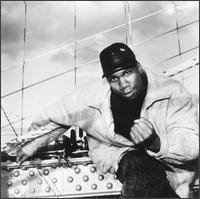
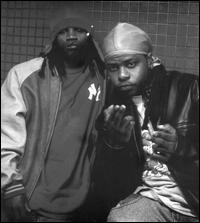
 Das EFX's wildly playful, rapid-fire stuttering — dense with rhymes and nonsense words — was one of the most distinctive and influential lyrical styles in early-'90s hip-hop. While the duo completely rewrote the MC rule book, they themselves were increasingly pegged as a one-dimensional novelty the longer their career progressed, despite watching elements of their style creep into countless rappers' bags of tricks. Krazy Drazyz (born Andre Weston; Teaneck, NJ) and Skoob (born Willie Hines) were both raised in Brooklyn, but didn't begin performing together until they met at Virginia State University in 1988. Removed from an active music scene, the two were free to develop their most idiosyncratic tendencies; they started making up gibberish words (anything ending in "-iggity" was a favorite) that added loads of extra syllables to their lines, and wove plenty of pop-cultural references into the tongue-twisting lyrical gymnastics that resulted. Das EFX caught their big break when they performed at a talent show judged by EPMD; though they didn't win, EPMD was impressed enough to offer them a deal, and the duo became part of the Def Squad crew of protégés.Signing to the East
 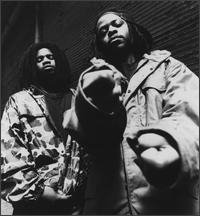 West label, Das EFX began work on their debut album, commuting between Virginia and New York and mailing tapes to EPMD (then touring the country) for guidance. Upon its release in 1992, Dead Serious caused an immediate sensation, and is still considered something of a landmark in hip-hop circles. The first single, the instantly memorable signature song "They Want EFX," was a Top 40 pop hit and a Top Ten R&B hit, and helped push sales of Dead Serious past the platinum mark. Wary of being pigeonholed by repeating themselves, the duo slowed down their lyrical flow and downplayed the surrealistic side of their interplay on the follow-up album, 1993's Straight Up Sewaside, which went gold. Around the time of 1995's disappointing Hold It Down, Das EFX found themselves caught in the middle of EPMD's ugly breakup; it led to a three-year absence from recording. By the time they returned in 1998 with Generation EFX, the group was playing more to a devoted but narrower cult audience; they have remained largely silent since.
Das EFX - Dead Serious (Apr 7, 1992: East West)
 Das EFX — part of EPMD's Def Squad crew, which also included K-Solo and Redman, among others — made such a wide breakthrough in 1992 with their debut album that their hit "They Want EFX" was even referenced in the lily-white teen serial Beverly Hills 90210. That Dead Serious could have that sort of broad impact and still retain its credibility within the underground hip-hop community says something about its appeal, which was considerable. But the album wasn't just appealing; it was also enormously influential, ushering in an entirely unique rhyming flow that influenced any number of rappers, established and novice alike. What exactly the duo is rapping about is anyone's guess. One thing is for sure: their lyrics are about as far removed from hardcore realism as they could possibly be, and although there are certain elements of boasting, it is so cut up and contorted that it never sounds like there's even a hint of the humdrum here. None of the lyrical clichés that can occasionally bog down even the finest hip-hop artist are present. Members Dre and Skoob (tellingly, "books" spelled backward) instead engage in lightning-fast, tongue-twisted word association and stream-of-consciousness rants rich in pop cultural references and allusions. It was a completely original rhyming style in 1992 — one of the reasons it had such an impact both in the insular world of hip-hop and on the wider public — but it also had an invigorating looseness that lent itself to commercial radio. "They Want EFX" is clearly the creative highlight of the album; the other songs work the same basic template, and each one is nearly equal in execution and charm, particularly the jaunty "Mic Checka" and "Jussummen."
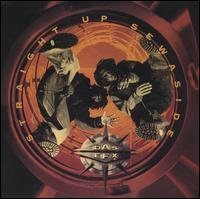 By the time Sewaside saw the light of day, the public hadn't fully absorbed Das EFX's innovative debut, Dead Serious. The hardcore rap game had barely caught up with the brilliance of their rapid-fire vocal delivery and sample-laden beats. But then again, another crew from Staten Island emerged in 1993 and took the rap game by total storm, leaving the genius of Sewaside somewhat overshadowed by their dominance. However, this change in climate shouldn't overshadow Sewaside as a crucial record in the Das EFX canon. While the duo's methods of madness were slowly emulated by a large plethora of MCs, Das EFX stayed with the same effective blueprint laid down in Dead Serious. By maintaining this consistency, Sewaside lacks the punch in the gut that Dead Serious delivered, but it's still a solid record that completists and newfound fans will equally enjoy.
Das EFX - Hold It Down (Oct 1995: East West)
 Although the duo tries very hard, there isn't much on Hold It Down, Das EFX's third album, that makes it very different from their previous records. The production is a bit leaner and their delivery is a bit harder, yet that doesn't disguise the fact that the beats aren't as strong as their earlier albums, nor are their raps as exciting and inventive. Nevertheless, there are some strong moments on Hold It Down, and it should please fans of the duo, even if it doesn't appeal to the same large audience that embraced their debut.
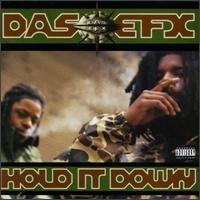 Although the duo tries very hard, there isn't much on Hold It Down, Das EFX's third album, that makes it very different from their previous records. The production is a bit leaner and their delivery is a bit harder, yet that doesn't disguise the fact that the beats aren't as strong as their earlier albums, nor are their raps as exciting and inventive. Nevertheless, there are some strong moments on Hold It Down, and it should please fans of the duo, even if it doesn't appeal to the same large audience that embraced their debut.
 Das EFX never quite recovered from the perception that their hyperspeed rhyming style was little more than a novelty. Not only were they written off in some quarters, but their hard-edged, rhyme-centric style was overshadowed by the moked-out gangsta funk coming from the West Coast. Hold It Down, their third album, suffered not only from these problems, but the fact that it wasn't very good. On the other hand, its follow-up, Generation EFX, is a hard-hitting return to form. Enlisting a number of guest artists and producers — including EPMD, Tumblin' Dice Productions, Angel "8-Off" Aguilar, Nocturnal, Miss Jones and Redman — the group revamps their trademark sound; it's still recognizably EFX, but it's harder and hipper than before. Like all their albums, Generation EFX relies more on style than substance — not all of the hooks hold, some of the grooves just lie there — but on the whole, it's their best album since Straight Up Sewaside.
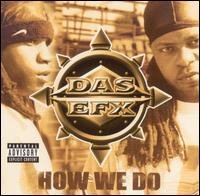 The rap game has changed significantly since the arrival of Das EFX on the scene over a decade ago with 1992's seminal Dead Serious. And if that seems like a long time, consider that the last time Das EFX released a new record was nearly five years ago, and things seem that much more distant. With How We Do, Dray and Skoob try and reestablish themselves as prominent fixtures in the hip-hop game. And while their trademark rap delivery was originally their ticket to notoriety, it is sadly absent throughout the majority of this record. Succumbing to the predictability of subjects such as hustling, women, sex, and murder, How We Do is simply a tedious exercise trying to pander to the lowest common denominator of hip-hop listener. Rather than attempt to raise the bar, or even meet the outstanding levels of early releases, it all seems like an attempt to regain acceptance by a community they believed forgot about them. And while there are moments of brilliance that still show they have the skills to justify their place in hip-hop history, they're simply too few and far between to make for a worthwhile listen. This one is for diehard Das EFX loyalists only, which is a shame, as it's a reminder of just how diluted rap and hip-hop can become at times.
Leave your comment and click on banner to support us.Enjoy! ;)
And remember you must support artists go and buy this albums.
And remember you must support artists go and buy this albums.

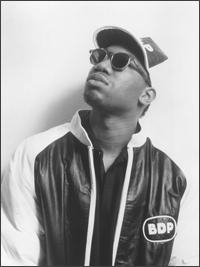 Boogie Down Productions was one of the most important and influential hip-hop groups of the latter half of the '80s. Led by the often brilliant and incendiary MC KRS-One, BDP were pioneers of both hardcore and political (or "conscious") rap — and if that seems contradictory, it also illustrates the scope of KRS-One's talent for chronicling and even shaping his culture. Musically, BDP usually employed spare, minimal backdrops that accentuated KRS-One's booming delivery, and they were also among the very first hip-hop artists to incorporate elements of Jamaican ragga and dancehall into their style. Early on, BDP devoted itself to brash but realistic narratives of ghetto life, which made them a street-level sensation; however, after the murder of original DJ Scott La Rock, KRS-One — who now essentially was BDP — devoted himself to socially and politically conscious material that earned him the nickname "the Teacher." In the process, he helped pave the way for both gangsta rap and the positive, Afrocentric Native Tongues movement — a legacy no other rapper can claim. KRS-One retired the Boogie Down Productions moniker in the early '90s to release records under his own name; to this day, he remains one of hip-hop's most outspoken and respected intellectuals.KRS-One's real name is Laurence Krisna Parker, or simply Kris Parker; some accounts hold that he was born with the "Krisna" moniker, while others suggest it was a nickname given to him during his youth for his interest in spirituality. Born in Brooklyn's Park Slope area in 1965, his Trinidad-born father was deported not long after his birth, and he later adopted his stepfather's last name of Parker. Early in his teens, he dropped out of high school and left home, migrating to the South Bronx; although he survived mostly on the streets and in homeless shelters, he continued his education by studying extensively in public libraries. During this period, he became interested in hip-hop culture, writing his own raps and tagging graffiti under the name KRS-One (originally an abbreviation for "Kris Number One" but later turned into the acronym "Knowledge Reigns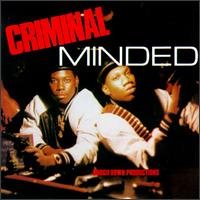
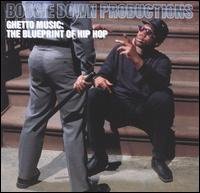 The second Boogie Down Productions album devoted mostly to consciousness raising, Ghetto Music: The Blueprint of Hip Hop finds KRS-One evolving into a fierce advocate for both his community and his chosen art form. He's particularly concerned about the direction of the latter: he's wary of hip-hop being co-opted by the pop mainstream, and the album's title comes from his conviction that real hip-hop is built on the vitality and rebelliousness of the streets. Accordingly, Ghetto Music contains a few more battle rhymes than usual, plus some showcases for pure MC technique, in keeping with the most basic elements of the music. The production, too, is still resolutely minimalist, and even if it's a little more fleshed-out than in the past, it consciously makes no concessions to pop or R&B accessibility. There are more reggae inflections in KRS-One's delivery than ever before, audible in about half the tracks here, and the production starts to echo dancehall more explicitly on a few. Meanwhile, as the Teacher, he's actually put together lesson plans for a couple tracks: "Why Is That?" and "You Must Learn" are basically lectures about biblical and African-American history, respectively. This is where KRS-One starts to fall prey to didacticism, but he has relevant points to make, and the rapping is surprisingly nimble given all the information he's trying to pack in. Elsewhere, "Who Protects Us from You?" is a bouncy anti-police-brutality rap, and KRS closes the album with the point that "World Peace" can only be achieved through a pragmatic, aggressive struggle for equality. Although Ghetto Music has a few signs that KRS is starting to take himself a little too seriously (he dubs himself a metaphysician in the liner notes), overall it's another excellent effort and the last truly great BDP album.
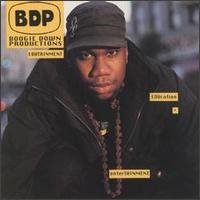 KRS-One's artistic winning streak continued with Edutainment, Boogie Down Productions' fourth album. True to form, he focuses on black history and speaks out on homelessness, racism, police excesses, and materialism with clarity and insight. KRS was often compared to Public Enemy leader Chuck D because of his consistently sociopolitical focus, but there's no mistaking the fact that his unique mixture of black nationalism, Eastern religion (both Hinduism and Buddhism), and Rastafarian philosophy is very much his own. From a commercial standpoint, he had become a little too intellectual and wasn't selling as many albums as many in rap's gangsta school. But from an artistic perspective, Edutainment is as commendable as it is riveting.
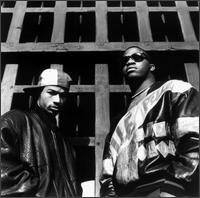 The rebirth of hip-hop's originating borough the Bronx can be credited in part to this two-man crew. While late-'80s/early-'90s hip-hop had gotten to be mostly party-oriented and at times downright corny, this duo brought back some swagger and soul. Show and A.G. were the first out the box from the superb Diggin' in the Crates Crew, an elite team of MCs and producers who can claim much clout and influence on genuine East Coast hip-hop. The spirit of rap's forefathers can be felt in the gritty weight of this duo's pioneering sound. Learning from their cohort Lord Finesse, the two started an underground buzz by street promoting their demos then selling the tapes out of the trunks of their cars. The street sales helped them polish their debut single "Soul Clap" b/w "Party Groove," a cut that banged dance clubs and got love on Yo! MTV Raps for many a week, a self-titled EP was released in March of 1992. Their debut album, Runaway Slave, followed in the fall and is seen as an early-'90s hip-hop essential. The album brought a bouncing hardcore sound of crisp, jazzy horns, stiff drum kicks, and snapping snares that could get a party hopping but could also satisfy the non-dancing purist nodding his head in the back of the club. The album truly is a D.I.T.C. family affair and introduced such legendary names as the late Big L, Fat Joe, and Diamond D, whose classic debut solo album Stunts, Blunts and Hip Hop dropped the same week in 1992. The albatross of making unadulterated rap music is that it sometimes costs a crew acclaim, for Show and A.G. are some of rap's disturbingly underrated. The sequel to their raw, stripped sound came in 1995 with the under-appreciated Goodfelas and the two were major contributors to D.I.T.C.'s eponymous debut album in 2000.
 The second shot fired from D.I.T.C.'s charter members Show & A.G. is a shade darker than their debut. While 1992's Runaway Slave was definitely no new jack swing affair, Good Fellas is decidedly more grimy and a lot less playful, both on the production and the lyrical ends. The lead single, "Next Level," also remixed exceptionally on the album by DJ Premier, was the only track that made any above-ground noise. Arguably the best cut on the album, the track is a manifesto of real hip-hop over a melodic guitar sample. Much of the album rumbles along to the tune of low bass grooves and noisy ambient loops of a jazzy variety. From bouncy xylophones to the standard Showbiz horns and kick drums, the production here is tightly constructed. At the time of its release (mid-1995), East Coast hip-hop was cruising along in a rugged gangster mode. All the while an ugly coastal battle was brewing that would conspire to darken hip-hop forevermore. This album steers clear of the coast bashing despite its unmistakable East Coast stamp and appeal. A few tracks do lack a distinct flavor, but overall the methodical, unassuming D.I.T.C. sound here has since been grafted but never duplicated. Show & A.G. affirm that the road to respect-worthy hip-hop status is not through releasing an album every six months, but by letting things marinate for a few years and then proving you're still on top of your game.